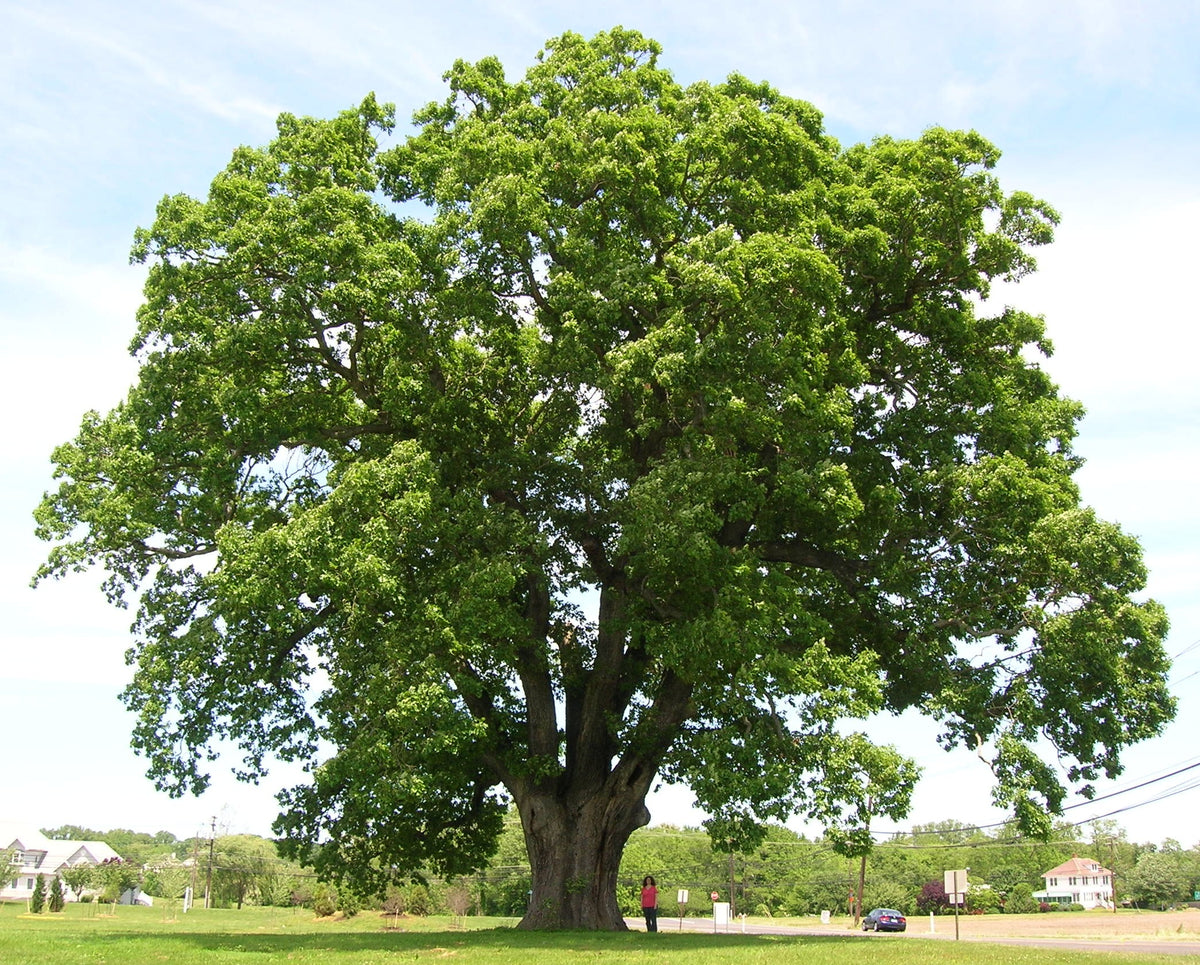
White Oak Seeds (Quercus alba) – Rare Heirloom Native Hardwood Tree
White Oak Seeds (Quercus alba) – Rare Heirloom Native Hardwood Tree
Couldn't load pickup availability
White Oak Seeds (Quercus alba) – Rare Heirloom Native Hardwood Tree
The Quercus alba, commonly known as White Oak, is a majestic native North American hardwood tree prized for its massive form, exceptional longevity, and striking silvery-gray bark. Native to the Eastern United States, this iconic species is a favorite among native landscapers, homesteaders, and wildlife enthusiasts for its durability and ecological value.
The White Oak develops a broad, rounded crown and a thick, sturdy trunk capable of living for centuries. Its lobed leaves turn a deep burgundy-red in autumn, and the tree produces sweet acorns that are a vital food source for deer, turkey, and squirrels.
This slow-growing, long-lived deciduous tree develops a deep taproot and performs best in rich, well-draining soil. Once established, it is highly adaptable, drought tolerant, and resistant to many common pests and diseases, making it one of the most durable native shade trees available.
🌱 Growing & Care Information
- Light: Full sun to partial shade
- Soil: Rich, well-draining soil; adaptable to many soil types
- Water: Moderate; drought tolerant once established
- Growth: Slow-growing, exceptionally long-lived deciduous tree
- Climate: Temperate zones, Eastern United States native range
🌿 Why Grow White Oak?
- Genuine heirloom, non-GMO native species
- Iconic, long-lived shade and specimen tree
- Strong, durable hardwood prized for furniture and flooring
- Deep burgundy-red fall foliage
- Naturally pest and disease resistant
- Produces sweet acorns valued by wildlife
- Excellent large-property and estate shade tree
- Ideal for reforestation and native habitat restoration
USDA Hardiness Zones: 3–9
White Oak Germination
White Oak acorns germinate readily and do not require a long cold stratification period like red oak or hickory species — fresh, viable acorns can sprout the same fall they're collected.
- Plant Promptly — White oak acorns dry out quickly and lose viability if stored too long. Plant as soon as possible after receiving them — ideally within a few days.
- Sow — Plant acorns 1–2 inches deep in well-draining soil, either directly outdoors in fall or in a deep container to accommodate the developing taproot. Tamp soil gently and mulch the planting area to retain moisture and moderate temperature.
- Germination — Fall-sown acorns will typically begin root development that same season, with shoot growth emerging the following spring. Germination rates for sound, fresh acorns are generally high.
- Protect from Wildlife — Acorns are a preferred food source for squirrels and other wildlife. Caging or screening fall-sown acorns helps protect them through winter.
Germinación del roble blanco
Las bellotas del roble blanco germinan con facilidad y no requieren un periodo prolongado de estratificación en frío, a diferencia de las especies de roble rojo o nogal americano (*hickory*); las bellotas frescas y viables pueden brotar el mismo otoño en que se recolectan.
1. Plante de inmediato — Las bellotas de roble blanco se secan rápidamente y pierden su viabilidad si se almacenan durante demasiado tiempo. Plántelas tan pronto como las reciba; lo ideal es hacerlo en un plazo de pocos días.
2. Siembra — Plante las bellotas a una profundidad de 1 a 2 pulgadas (2,5 a 5 cm) en un suelo con buen drenaje, ya sea directamente en el exterior durante el otoño o en un recipiente profundo que permita el desarrollo de la raíz pivotante. Compacte ligeramente la tierra y cubra la zona de siembra con mantillo para retener la humedad y regular la temperatura.
3. Germinación — Las bellotas sembradas en otoño suelen comenzar a desarrollar la raíz esa misma estación, mientras que el brote aéreo emerge la primavera siguiente. Las tasas de germinación de las bellotas frescas y en buen estado suelen ser elevadas.
4. Protección frente a la fauna — Las bellotas son una fuente de alimento predilecta para las ardillas y otros animales silvestres. Proteger las bellotas sembradas en otoño con jaulas o mallas ayuda a resguardarlas durante el invierno.
Share