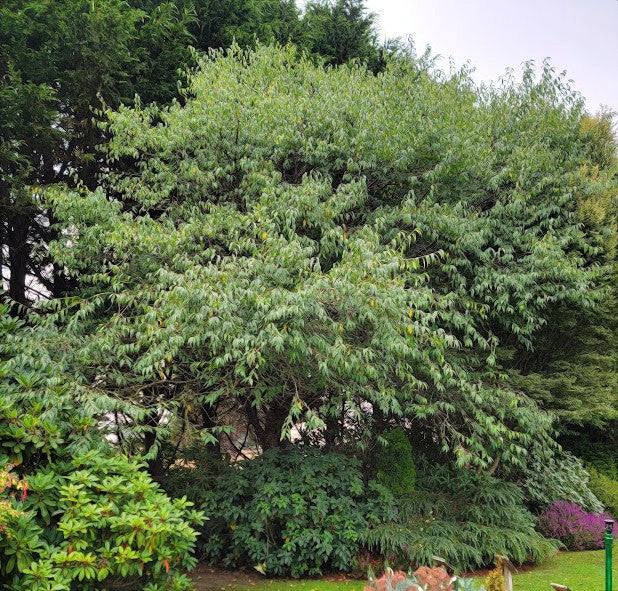
Tibetan Paper Birchbark Cherry Tree Seeds (Prunus serrula) Hardy Ornamental
Tibetan Paper Birchbark Cherry Tree Seeds (Prunus serrula) Hardy Ornamental
Couldn't load pickup availability
Tibetan Paperbark Cherry Tree Seeds (Prunus serrula)
The Prunus serrula, commonly known as the Tibetan Cherry or Paperbark Cherry, is a highly ornamental deciduous tree prized for its exceptionally glossy, coppery-red bark that peels in smooth horizontal bands. Native to western China and Tibet, this striking species is grown primarily for its dramatic year-round bark interest.
Known for its polished mahogany-colored trunk, Tibetan Cherry provides outstanding winter appeal when most other trees are dormant. In spring, it produces clusters of small white bowl-shaped flowers that emerge just before the foliage, followed by small cherry-like fruits in summer. Its green leaves turn golden yellow in autumn before falling.
This species typically grows 20–30 feet tall with an upright, elegant form. The smooth, shimmering bark becomes more pronounced with age, making it one of the most visually distinctive ornamental cherry trees in cultivation.
🌱 Growing & Care Information
Light: Full sun preferred for best growth and flowering
Soil: Moist, well-drained loamy soil
Water: Moderate; avoid waterlogged conditions
Growth: Moderate-growing ornamental deciduous tree
Climate: Cold hardy temperate climates
Tibetan Cherry performs best in well-drained soils with good air circulation to help prevent disease. It does not tolerate poorly drained or consistently wet soil conditions. Once established, it is a reliable and low-maintenance ornamental tree with strong seasonal interest.
🌿 Why Grow Tibetan Paperbark Cherry?
• Stunning glossy cinnamon-red peeling bark
• Strong winter ornamental interest
• Spring white flowering display
• Attractive golden fall foliage
• Unique year-round visual texture
• Excellent specimen landscape tree
• Moderate size ideal for gardens
• Cold hardy and adaptable in temperate climates
Tibetan Paperbark Cherry is one of the most striking ornamental bark trees, valued as much for its sculptural trunk as for its seasonal flowering and foliage display.
USDA Hardiness Zones: 5–8
Tibetan Cherry Germination:
1) Rub the outside shell with rough grit sandpaper to scarify, & soak seeds in warm water for 24 hours.
2) Place inside of a zip lock bag filled with moist vermiculite, or peat moss. Place inside the fridge for 60 days to cold stratify. Periodically check to ensure they do not dry out, also being sure not to over wet them. Just slightly moist.
3) Use a heated propagator to keep the soil at 75 degrees F, and sow them no more than 1/4 inch deep, in a well draining seed starting mix.
4) Expect germination for some within 3-4 weeks, but don't toss any out that do not sprout early as some take longer, and can take up to 8 weeks to sprout.
"If you Need Anything, Please Contact Us First"
Germinación de la cereza tibetana:
1) Frote la cáscara exterior con papel de lija de grano grueso para escarificar y sumerja las semillas en agua tibia durante 24 horas.
2) Colóquelas dentro de una bolsa con cierre hermético llena de vermiculita húmeda o turba. Colóquelas en el refrigerador durante 60 días para estratificar en frío. Revíselas periódicamente para asegurarse de que no se sequen y asegúrese de no mojarlas demasiado. Solo ligeramente húmedas.
3) Use un propagador calentado para mantener la tierra a 75 grados F y siembre las semillas a no más de 1/4 de pulgada de profundidad, en una mezcla para semillas que drene bien.
4) Espere que algunas germinen en 3 o 4 semanas, pero no deseche las que no broten pronto, ya que algunas tardan más y pueden tardar hasta 8 semanas en brotar.
"Si necesita algo, comuníquese con nosotros primero"
Share