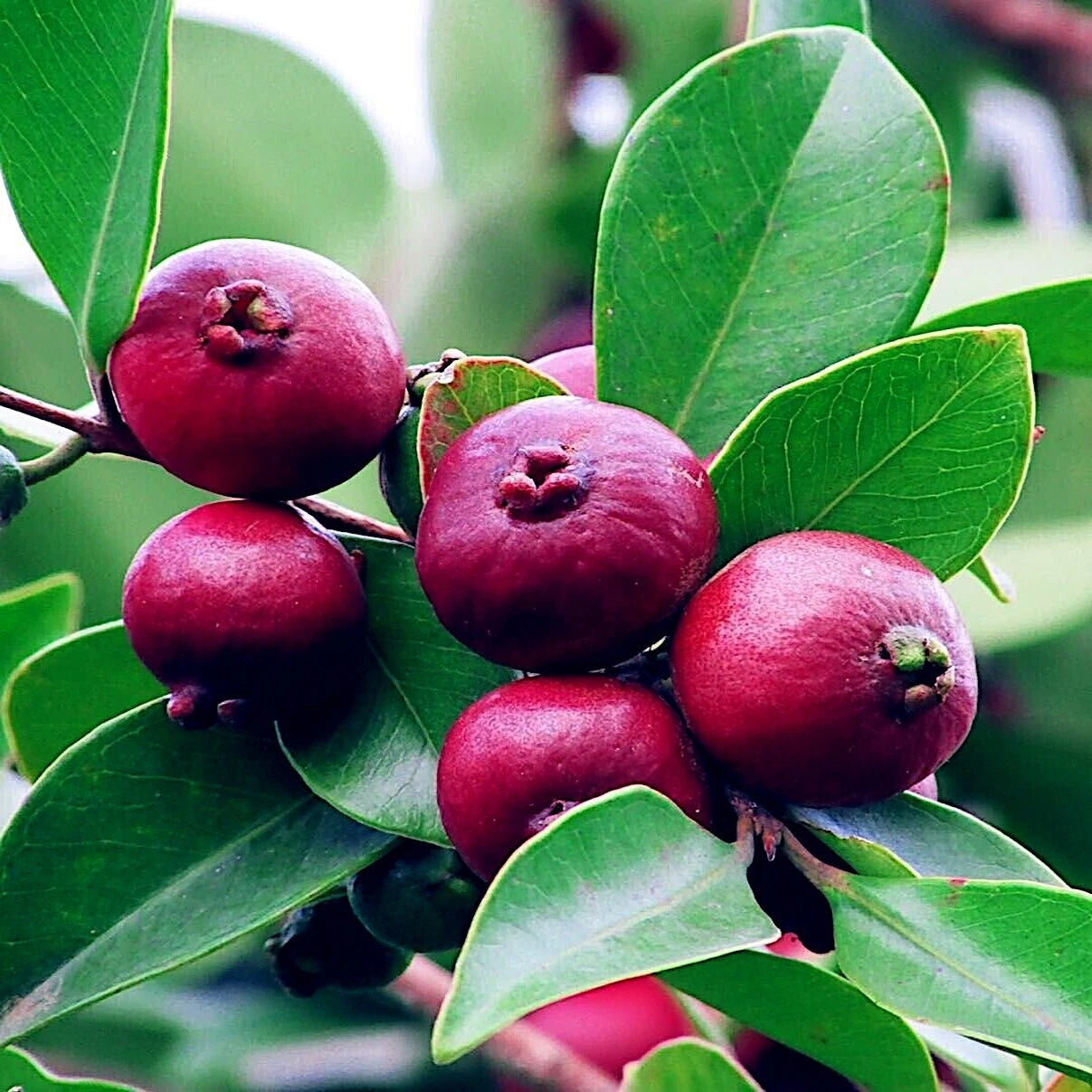
Strawberry Guava Tree Seeds (Psidium cattleianum) Hardy Tropical Edible Fruit Plant
Strawberry Guava Tree Seeds (Psidium cattleianum) Hardy Tropical Edible Fruit Plant
Couldn't load pickup availability
STRAWBERRY GUAVA TREE SEEDS (Psidium cattleianum)
The Psidium cattleianum, commonly known as Strawberry Guava, is a highly productive evergreen fruiting shrub or small tree prized for its sweet tropical fruit, attractive glossy foliage, and exceptional adaptability. Native to South America, this hardy species has become widely cultivated in warm climates around the world for home orchards, edible landscaping, and natural hedging.
Known for its dense branching habit and compact growth form, Strawberry Guava typically grows 6–14 feet tall, though it can reach larger sizes under ideal conditions. It produces small round fruits that ripen from green to deep red or yellow, depending on the variety, with a soft aromatic pulp inside filled with small edible seeds.
The fruit has a sweet, fragrant flavor often described as a blend of strawberry and tropical guava, making it one of the most enjoyable small tropical fruits for fresh eating. It can also be used for juices, jams, jellies, and desserts. The plant is especially valued for its ability to produce fruit over an extended season in warm climates.
🌱 Growing & Care Information
Light: Full sun to partial shade
Soil: Adaptable; prefers well-drained soil but tolerates poor soils
Water: Moderate; drought tolerant once established
Growth: Fast-growing evergreen fruiting shrub
Climate: Warm subtropical to tropical climates
Strawberry Guava is highly resilient and can tolerate a wide range of soil conditions, including rocky or limestone soils where other fruit trees may struggle. It performs best in full sun and benefits from regular watering during fruit development for optimal yield.
This species is widely used in edible hedgerows, backyard orchards, and permaculture systems due to its productivity, toughness, and attractive evergreen appearance.
🌿 Why Grow Strawberry Guava?
• Produces sweet strawberry-like tropical fruit
• Excellent edible hedge or privacy plant
• Highly adaptable and low maintenance
• Evergreen ornamental fruiting shrub
• Great for fresh eating, jams, and juices
• Tolerates poor soils and tough conditions
• Long fruiting season in warm climates
• Ideal for home orchards and edible gardens
Strawberry Guava is one of the most reliable tropical fruiting shrubs for gardeners seeking an easy-to-grow plant that combines ornamental beauty with consistent edible fruit production.
USDA Hardiness Zones: 9–11
Strawberry Guava Germination:
1) Scarify in order to break their dormancy, you need to soak the seeds in boiling water for five minutes.
2) Be sure to use a heated propagator to ensure the soil maintains a temperature as constant of 80-85 degrees Fahrenheit. Anything less will result in poor germination results.
3) To plant the seeds, prepare a potting mix by adding soilless seed-starting mix in a 4-inch planting mix.
4) Place the seeds on the center of the 4-inch starting mix and gently press them into the center. Place the seeds about 1/4-1/2 down the sterile soil mix and make sure you keep the potting mix moist. Add a small handful of the mix to ensure that the seeds are settled in the soilless seed-starting mix. Water slowly to soak the pot. You are also required to be checking from time to time to make sure the soil remains moist.
5) Patience is needed as with and Exotic Tropical Germination will be erratic and can take any time from two weeks to more than eight weeks.
"Please Contact us First if you need Anything"
Germinación de la guayaba y la fresa:
1) Para escarificar y romper su letargo, debes remojar las semillas en agua hirviendo durante cinco minutos.
2) Asegúrate de usar un propagador calentado para asegurar que la tierra mantenga una temperatura constante de 80-85 grados Fahrenheit. Cualquier temperatura menor dará como resultado malos resultados de germinación.
3) Para plantar las semillas, prepara una mezcla para macetas agregando una mezcla para iniciar la siembra sin tierra en una mezcla para plantar de 4 pulgadas.
4) Coloca las semillas en el centro de la mezcla para iniciar la siembra de 4 pulgadas y presiónalas suavemente hacia el centro. Coloca las semillas aproximadamente 1/4-1/2 hacia abajo en la mezcla de tierra esterilizada y asegúrate de mantener la mezcla para macetas húmeda. Agrega un puñado pequeño de la mezcla para asegurar que las semillas se asienten en la mezcla para iniciar la siembra sin tierra. Riega lentamente para remojar la maceta. También debes revisar de vez en cuando para asegurarte de que la tierra permanezca húmeda.
5) Es necesaria paciencia, ya que la germinación de las plantas tropicales exóticas será errática y puede llevar desde dos semanas hasta más de ocho semanas.
"Comuníquese con nosotros primero si necesita algo"
Share