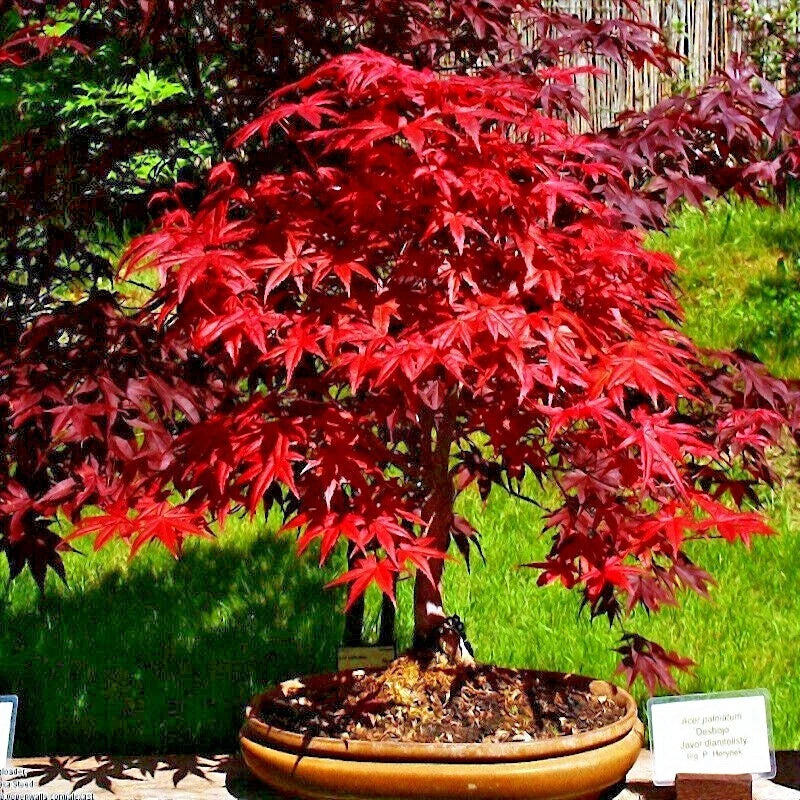
Red Japanese Maple Tree Seeds (Acer palmatum atropurpureum) Hardy Ornamental Bonsai Tree
Red Japanese Maple Tree Seeds (Acer palmatum atropurpureum) Hardy Ornamental Bonsai Tree
Couldn't load pickup availability
Japanese Red Maple Tree Seeds (Acer palmatum atropurpureum)
The Acer palmatum, commonly known as the Japanese Red Maple, is one of the most elegant and sought-after ornamental trees grown for its graceful branching habit and stunning wine-red foliage. Originally introduced into the United States before World War II and popularized by the famous Bloodgood Nursery of Long Island, this classic Japanese maple remains a favorite among landscapers, collectors, and bonsai enthusiasts alike.
Known for its richly colored foliage, the Japanese Red Maple produces deep wine-red leaves in spring that gradually soften into reddish-green tones through summer before returning to brilliant crimson and scarlet shades in autumn. Its finely textured leaves and layered canopy create a peaceful, artistic appearance that works beautifully in ornamental gardens and Japanese-inspired landscapes.
This hardy deciduous tree develops a spreading growth habit and can reach 15–20 feet tall under ideal conditions. Its naturally sculptural form and manageable growth also make it one of the most popular trees used for bonsai cultivation.
Japanese Red Maple is valued not only for its beauty, but also for its adaptability and ease of care. Once established, it requires relatively little maintenance and performs reliably in a variety of garden settings.
🌱 Growing & Care Information
Light: Full sun to partial shade
Soil: Well-drained, fertile soil
Water: Moderate moisture preferred
Growth: Fast-growing ornamental tree
Climate: Cold hardy temperate climates
Japanese Red Maple grows best in locations protected from harsh afternoon heat and drying winds. It performs exceptionally well as a specimen tree, patio focal point, or bonsai subject.
🌿 Why Grow Japanese Red Maple?
• Stunning wine-red foliage throughout the seasons
• Graceful ornamental branching structure
• Excellent bonsai tree specimen
• Fast-growing and easy to maintain
• Beautiful fall color display
• Ideal focal point landscape tree
• Hardy and adaptable ornamental species
• One of the most popular Japanese garden trees
USDA Hardiness Zones: 5–9
Red Maple Germination:
1) Put the seeds in a heat-proof container and pour hot water over them. The water temperature should be no higher than 110 degrees Fahrenheit. Let the seeds cool as with the water and allow the maple seeds to soak for at least 24 hours or up to two days.
2) Drain the water and place the seeds in a plastic bag filled with peat moss or vermiculite. Moisten the mixture with a small amount of water. Poke a few small holes in the bag to allow for air circulation.
3) Put the bag of seeds in the refrigerator for approximately 100 days. This stratification process breaks down the seed coats and prepares them for germination. When you remove the seeds, you may see small roots growing from the tips, indicating that the seeds have begun to germinate.
4) Fill 4-inch pots with potting mix and sow the seeds on the surface of the soil. Cover seeds with three-eighths inch of soil.
5) Water the seeds until the soil feels moist. Let the soil dry out before watering again to prevent rotting.
6) Watch for seedling emergence with one to two weeks. When seedlings emerge, provide light shade to prevent burning.
Germinación del arce rojo:
1) Coloque las semillas en un recipiente resistente al calor y vierta agua caliente sobre ellas. La temperatura del agua no debe ser superior a 110 grados Fahrenheit. Deje que las semillas se enfríen como con el agua y deje que las semillas de arce se remojen durante al menos 24 horas o hasta dos días.
2) Escurra el agua y coloque las semillas en una bolsa de plástico llena de turba o vermiculita. Humedezca la mezcla con una pequeña cantidad de agua. Haga algunos agujeros pequeños en la bolsa para permitir la circulación del aire.
3) Coloque la bolsa de semillas en el refrigerador durante aproximadamente 100 días. Este proceso de estratificación descompone las cubiertas de las semillas y las prepara para la germinación. Cuando retire las semillas, es posible que vea pequeñas raíces creciendo desde las puntas, lo que indica que las semillas han comenzado a germinar.
4) Llene macetas de 4 pulgadas con mezcla para macetas y siembre las semillas en la superficie de la tierra. Cubra las semillas con tres octavos de pulgada de tierra.
5) Riega las semillas hasta que la tierra se sienta húmeda. Deja que la tierra se seque antes de volver a regar para evitar que se pudra.
6) Observa la aparición de las plántulas en una o dos semanas. Cuando emerjan las plántulas, proporciona una sombra ligera para evitar que se quemen.
Share