RAIN TREE SEEDS Monkey Pod “Hitachi” (Albizia saman) Rare Tropical Flowering Tree
RAIN TREE SEEDS Monkey Pod “Hitachi” (Albizia saman) Rare Tropical Flowering Tree
Couldn't load pickup availability
RAIN TREE SEEDS Monkey Pod “HITACHI” (Albizia saman)
The Albizia saman, commonly known as Rain Tree or Monkey Pod Tree, is a highly prized tropical flowering tree valued for its enormous umbrella-shaped canopy, graceful fern-like foliage, and exceptionally rapid growth. Native to Central and Northern South America, this classic ornamental species has been cultivated for centuries in tropical landscapes, estates, parks, and bonsai collections.
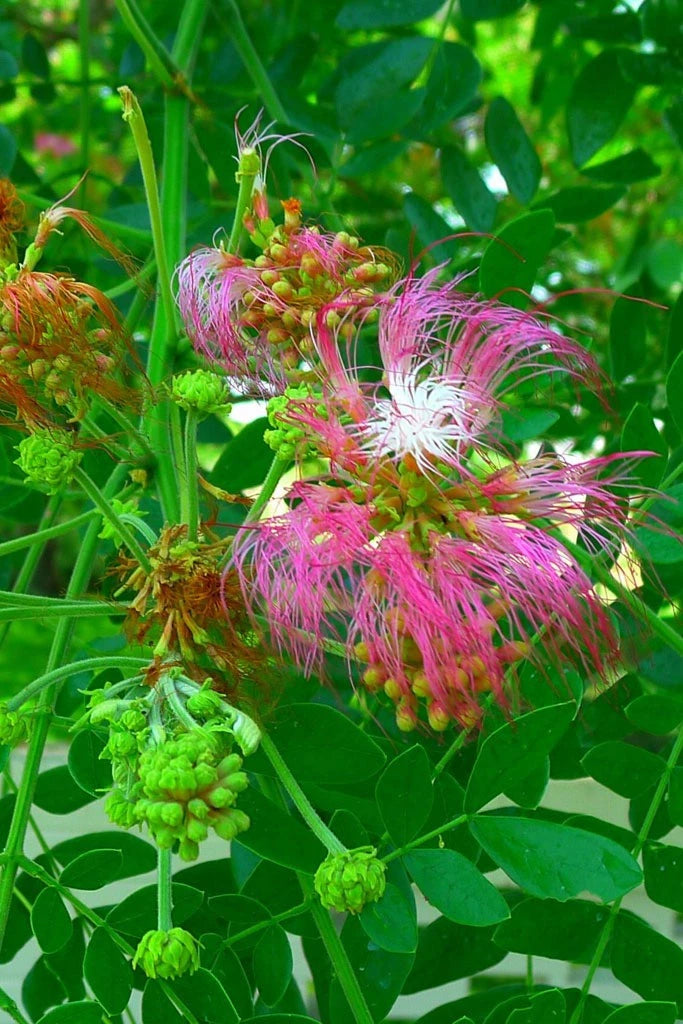
Known for its massive spreading growth habit and beautiful pink powder-puff flowers, Rain Tree is widely used for shade planting, tropical landscaping, avenue planting, and bonsai cultivation. When planted in open areas, it develops a broad dome-shaped crown that creates dense cooling shade and dramatic tropical character.
This species typically grows 50–100 feet tall with an exceptionally wide canopy spread, though it can be maintained at smaller sizes through pruning and container culture. The bark is dark gray-brown and becomes increasingly textured and rugged with age.
Rain Tree produces masses of silky pink and white flowers that attract pollinators and add striking ornamental beauty during the blooming season. Its delicate fern-like foliage folds inward during rain and at night, giving rise to the common name “Rain Tree.”
🌱 Growing & Care Information
Light: Full sun
Soil: Well-drained tropical or subtropical soil
Water: Moderate; drought tolerant once established
Growth: Fast-growing tropical flowering tree
Climate: Warm tropical and subtropical climates
Rain Tree is especially valued for its rapid canopy development, tropical appearance, and adaptability in warm climates. It responds exceptionally well to shaping and pruning, making it one of the finest tropical species for bonsai cultivation.
🌿 Why Grow Rain Tree?
• Massive umbrella-shaped tropical canopy
• Beautiful pink powder-puff flowers
• Excellent fast-growing shade tree
• Ideal for bonsai and tropical landscaping
• Attractive fern-like foliage
• Creates dramatic cooling shade
• Durable ornamental hardwood
• Long-lived tropical specimen tree
The Monkey Pod Tree has become world famous for its breathtaking canopy form and immense tropical beauty, contributing to its legendary status in tropical landscapes and botanical collections.
USDA Hardiness Zones: 10–12
Rain Tree Germination:
1. Fill a pot with water that equals five times the seed volume and bring it to a boil on a stove. Check the temperature of the water with a cooking thermometer, and when it reaches 176 degrees Fahrenheit, remove the pot from the stove.
2. Place the monkey pod tree seeds in the hot water and stir them for up to two minutes with a spoon before draining the liquid.
3. Fill a bowl with lukewarm water that's between 86 and 104 degrees Fahrenheit and soak the seeds in it for 24 hours. This pre-treatment is called scarification and alters the hard seed coat, which increases the chances of uniform germination.
4. Fill a pot with moist seed-starting mix up to 1 inch from the top, place the seed on top of the surface and cover it with a 1/2-inch layer of the mix. Tamp down lightly and moisten the surface with a water-filled spray bottle to avoid washing away the seed. Use a heated propagator to keep the soil at 70-85 degrees F.
5. Stretch plastic wrap over the pot to promote soil moisture retention and place it in a dimly lit area of the house. Lift the plastic daily to check that the soil is moist. Not wet. If not, lightly moisten it with a water-filled spray bottle before replacing the plastic. Expect germination within three to five days.
6. Remove the plastic as soon as the seedlings emerge, and gradually move the pot to a brighter area over a two-week period so that at the end of that time they're acclimated to being in full sunlight.
7. Transplant the seedlings outside to an area with full sun and well-draining soil after three to five months, when the seedlings are about 8 to 12 inches tall. Keep seeds in the fridge until you're ready to plant.
"Please Contact us First if you need Anything"
Germinación del árbol de lluvia:
1. Llene una olla con agua equivalente a cinco veces el volumen de la semilla y póngala a hervir en una estufa. Controle la temperatura del agua con un termómetro de cocina y, cuando alcance los 176 grados Fahrenheit, retire la olla de la estufa.
2. Coloque las semillas del árbol de la vaina de mono en el agua caliente y revuélvalas durante dos minutos con una cuchara antes de escurrir el líquido.
3. Llene un recipiente con agua tibia a una temperatura de entre 86 y 104 grados Fahrenheit y sumerja las semillas en ella durante 24 horas. Este tratamiento previo se llama escarificación y altera la capa dura de la semilla, lo que aumenta las posibilidades de una germinación uniforme.
4. Llene una olla con una mezcla húmeda para iniciar las semillas hasta 1 pulgada desde el borde, coloque la semilla sobre la superficie y cúbrala con una capa de 1/2 pulgada de la mezcla. Apisona ligeramente y humedece la superficie con un atomizador lleno de agua para evitar que se lleven las semillas. Usa un propagador calentado para mantener la tierra a una temperatura de 70 a 85 grados F.
5. Estira una envoltura de plástico sobre la maceta para promover la retención de humedad de la tierra y colócala en un área poco iluminada de la casa. Levanta el plástico a diario para verificar que la tierra esté húmeda. No mojada. Si no lo está, humedécela ligeramente con un atomizador lleno de agua antes de volver a colocar el plástico. Espera la germinación dentro de tres a cinco días.
6. Retira el plástico tan pronto como emerjan las plántulas y mueve gradualmente la maceta a un área más luminosa durante un período de dos semanas para que al final de ese tiempo se hayan aclimatado a estar a plena luz del sol.7.Trasplanta las plántulas al exterior a un área con pleno sol y tierra bien drenada después de tres a cinco meses, cuando las plántulas tengan aproximadamente de 8 a 12 pulgadas de alto. Mantén las semillas en el refrigerador hasta que estés listo para plantar.
"Comunícate con nosotros primero si necesitas algo"
Share