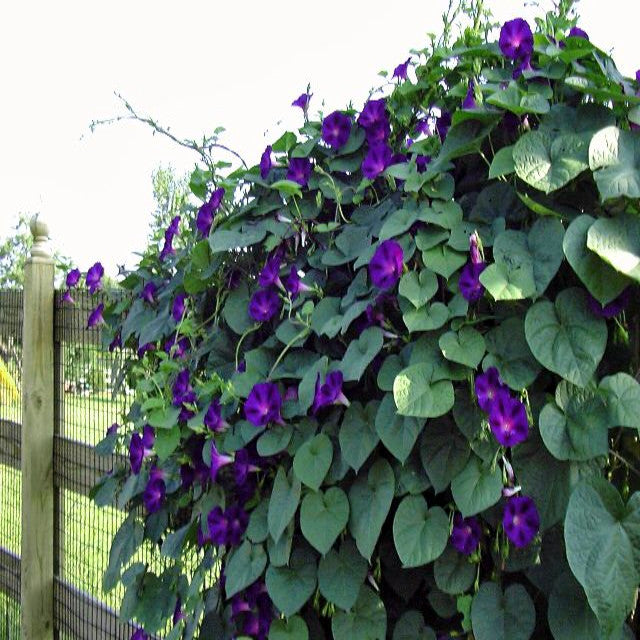
Purple Morning Glory Vine Seeds ‘Grandpa Ott’ (Ipomoea purpurea)
The Ipomoea purpurea ‘Grandpa Ott’, commonly known as Purple Morning Glory, is a fast-growing heirloom flowering vine prized for its rich violet-purple trumpet-shaped blooms and vigorous climbing habit. This classic ornamental vine is widely grown on fences, trellises, arbors, and garden structures where it creates a dense wall of colorful flowers throughout the warm season.
Known for its large, fragrant blooms that open in the early morning hours, Grandpa Ott Morning Glory produces an abundance of deep purple flowers with vivid centers that attract butterflies, hummingbirds, and beneficial pollinators. The heart-shaped green foliage provides a lush backdrop that enhances the vibrant flower display from summer into early fall.
This vigorous climbing vine can quickly reach lengths of 8–10 feet or more during the growing season, making it ideal for vertical gardening and privacy coverage. In colder climates it is typically grown as an annual, though it readily reseeds itself and often returns year after year in the garden.
Purple Morning Glory performs best in full sun with well-draining soil and is appreciated for its low maintenance nature and rapid growth.
🌱 Growing & Care Information
Light: Full sun
Soil: Moist, well-draining soil
Water: Moderate; keep evenly moist during establishment
Growth: Fast-growing climbing annual or perennial in warm climates
Climate: Widely adaptable in many growing zones
This heirloom vine grows quickly during warm weather and is excellent for covering fences, trellises, pergolas, and garden structures with seasonal color.
🌿 Why Grow Purple Morning Glory?
• Rich deep purple trumpet-shaped flowers
• Fast-growing climbing ornamental vine
• Excellent butterfly and hummingbird attractor
• Great for trellises, fences, and arbors
• Easy-care heirloom flowering plant
• Produces abundant blooms throughout summer
• Reseeds easily for recurring seasonal growth
• Ideal for cottage and pollinator gardens
USDA Hardiness Zones: 2–11
Purple Morning Glory Germination:
1) Scarify by sanding the seed shells with sandpaper, and place a few shallow nicks with a small knife of nail clippers. Stay shallow and Never too deep as it will kill any chance of germination.
2) Soak seeds in water for 24 hours.
3) Use a well draining seed starting mix and keep moist at all times, never wet. Plant seeds appx. 1/4" inch deep.
4) Use a heated propagator with a thermostat to set the daytime temperature to 86 degrees, while letting it drop to 68 at night. Alternating temperatures mimic their natural environment and drastically improves germination rates.
5) Cover with a piece of plastic to help retain humidity until the sprout. Check moisture levels every other day to be sure it doesn't dry out.
6) Expect germination within 5-21 days.
"Please Contact us First if you Need Anything"
Germinación de la Gloria de la Mañana Púrpura:
1) Escarifique las semillas lijando sus cáscaras con papel de lija y realice unos cuantos cortes superficiales con un cuchillo pequeño o un cortaúñas. Asegúrese de que sean cortes poco profundos; nunca los haga demasiado hondos, ya que esto anularía cualquier posibilidad de germinación.
2) Remoje las semillas en agua durante 24 horas.
3) Utilice una mezcla para la siembra de semillas que tenga buen drenaje y manténgala húmeda en todo momento, pero nunca empapada. Plante las semillas a una profundidad aproximada de 1/4 de pulgada.
4) Utilice un propagador térmico con termostato para fijar la temperatura diurna en 86 grados Fahrenheit, permitiendo que descienda a 68 grados durante la noche. La alternancia de temperaturas imita su entorno natural y mejora drásticamente las tasas de germinación.
5) Cubra el recipiente con un trozo de plástico para ayudar a retener la humedad hasta que las semillas germinen. Verifique los niveles de humedad cada dos días para asegurarse de que el sustrato no se seque.
6) La germinación debería ocurrir en un plazo de 5 a 21 días.
"Por favor, contáctenos primero si necesita algo."