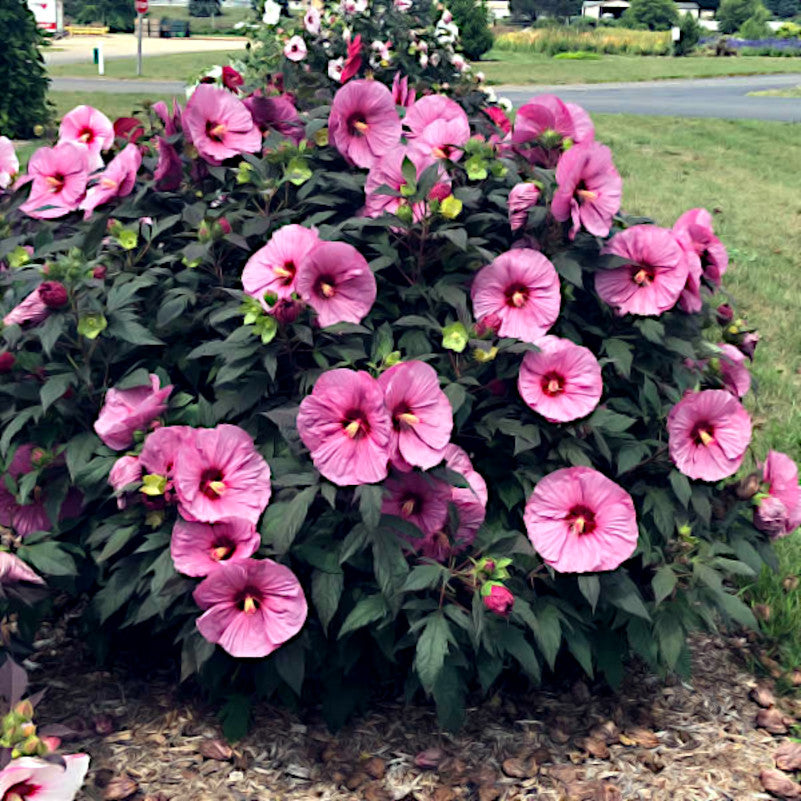
Pink Swamp Rose Mallow Seeds (Hibiscus moscheutos) Large Flower Hardy Hibiscus
Pink Swamp Rose Mallow Seeds (Hibiscus moscheutos) Large Flower Hardy Hibiscus
Couldn't load pickup availability
Pink Swamp Rose Mallow Flower Seeds (Hibiscus moscheutos)
The Hibiscus moscheutos, commonly known as Swamp Rose Mallow or Hardy Hibiscus, is a striking perennial flowering plant known for its enormous dinner-plate-sized blooms and strong cold hardiness. Native to wetlands and marshy areas of North America, this species is widely cultivated for its dramatic summer flowers and ability to thrive in moist garden conditions.
Known for producing some of the largest flowers of any perennial hibiscus, Swamp Rose Mallow can display blooms measuring 6–9 inches across in shades of pink, white, and rose. These showy flowers create a bold tropical appearance despite the plant’s ability to survive in colder climates.
This herbaceous perennial typically grows 4–7 feet tall, forming upright, bushy stems that die back in winter and re-emerge each spring. It is especially valued in landscaping for its late-summer flowering period when many other plants have finished blooming.
The plant is highly attractive to pollinators, including butterflies, bees, and hummingbirds, making it a strong choice for wildlife gardens and naturalized wetland plantings.
🌱 Growing & Care Information
Light: Full sun preferred
Soil: Moist to wet, organically rich soil
Water: High; prefers consistent moisture
Growth: Fast-growing herbaceous perennial
Climate: Cold hardy temperate climates
Swamp Rose Mallow performs best in consistently moist soils but can adapt to average garden conditions if watered regularly. It thrives in heat and humidity and is well-suited to southern and temperate climates.
Pinching young growth can encourage bushier plants, and cutting back stems in late autumn helps maintain healthy regrowth in spring.
🌿 Why Grow Swamp Rose Mallow?
• Massive 6–9 inch tropical-looking flowers
• Cold hardy perennial hibiscus
• Excellent butterfly, bee, and hummingbird plant
• Fast summer growth and strong bloom display
• Thrives in wet soils and rain gardens
• Heat and humidity tolerant
• Ideal for bold landscape impact
• Late-season flowering interest
Swamp Rose Mallow is one of the most impressive hardy flowering perennials, combining tropical-sized blooms with strong cold climate performance.
USDA Hardiness Zones: 5–9
Rose Mallow Germination:
1) Soak seeds in warm water for 24hrs.
2) Place seeds inside of a zip lock bag filled with moist sand and place inside the fridge for 60 days to cold stratify them. Leave 1 inch of the bag open for slight air circulation. This will break the seeds dormancy and allow them to sprout when planted.
3) Plant seeds 1/4" deep into a well draining seed starting mix.
4) Use a heated propagator mat to keep the soil at 85 degrees F. during the day. Turning off the mat at night to decrease the temperature between 65-68 degrees will mimic their natural conditions in the wild and increase germination speed.
5) Cover with plastic to keep humidity around 60%, and use a grow lamp to keep bright light on them, but no full sun.
6) Expect germination within 2-3 weeks.
"If you Need Anything, Please Contact us First"
Germinación de la rosa malva:
1) Remoje las semillas en agua tibia durante 24 horas.
2) Coloque las semillas dentro de una bolsa con cierre hermético llena de arena húmeda y póngalas en el refrigerador durante 60 días para estratificarlas en frío. Deje 1 pulgada de la bolsa abierta para que circule un poco el aire. Esto romperá la latencia de las semillas y les permitirá brotar cuando las plante.
3) Plante las semillas a 1/4" de profundidad en una mezcla de semillas que drene bien.
4) Use una estera de propagación calentada para mantener la tierra a 85 grados F durante el día. Apagar la estera por la noche para disminuir la temperatura entre 65 y 68 grados imitará sus condiciones naturales en la naturaleza y aumentará la velocidad de germinación.
5) Cúbralas con plástico para mantener la humedad alrededor del 60% y use una lámpara de cultivo para mantener una luz brillante sobre ellas, pero no a pleno sol.
6) Espere la germinación dentro de 2 a 3 semanas.
"Si necesita algo, comuníquese con nosotros primero"
Share