Osage Orange Tree Seeds (Maclura pomifera) Fast Growing Hedge Apple - Monkey Ball Tree
Osage Orange Tree Seeds (Maclura pomifera) Fast Growing Hedge Apple - Monkey Ball Tree
Couldn't load pickup availability
Osage Orange Tree Seeds (Maclura pomifera) Fast Hardy Hedge Apple Tree
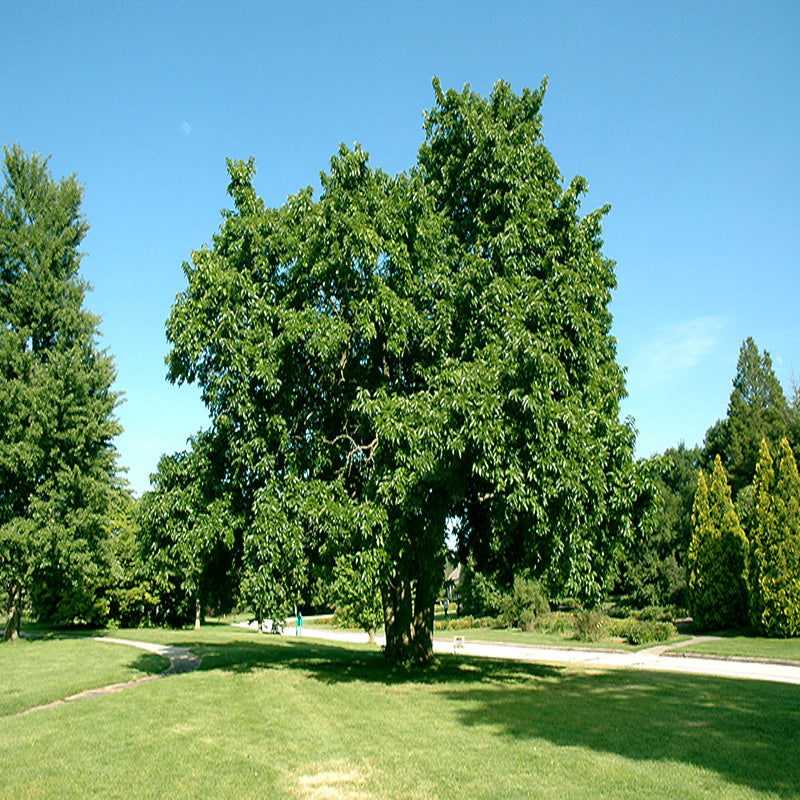
The Maclura pomifera, commonly known as Osage Orange or Hedge Apple, is a hardy deciduous tree native to the south-central United States. It is widely recognized for its dense growth habit, thorny branches, and large green fruit commonly called hedge apples or monkey balls.
This medium-sized tree typically grows 30–40 feet tall, occasionally reaching up to 50–60 feet under ideal conditions. It forms a rounded to irregular crown and produces glossy green leaves that turn yellow in autumn. The branches are often armed with sharp thorns, making it especially effective as a natural barrier or living fence.
Historically, Osage Orange wood was highly valued for its extreme durability and resistance to decay, making it useful for fence posts, wagon wheels, and structural timber. Today, it is still planted for windbreaks, hedgerows, and wildlife habitat.
The tree produces small green flowers in late spring, followed by large bumpy green fruits in fall. These fruits are not typically consumed but are often used decoratively or for natural pest deterrent folklore purposes.
This species thrives in full sun and adapts to a wide range of soil conditions. Once established, it is highly drought tolerant and extremely hardy, making it suitable for tough landscape conditions.
🌱 Growing & Care Information
Light: Full sun to partial shade
Soil: Adaptable; prefers well-draining soils
Water: Low once established
Growth: Fast-growing deciduous tree
Climate: Temperate regions
🌿 Why Grow Osage Orange?
• Excellent natural hedge and barrier tree
• Extremely durable, rot-resistant wood
• Hardy drought-tolerant species
• Wildlife-friendly windbreak tree
• Dense thorny growth for security planting
• Adaptable to poor soils
• Historic utility and ornamental value
• Long-lived landscape tree
USDA Hardiness Zones: 4–9
Osage Orange Germination:
"Osage Orange seeds have an appx. germination rate of 50%, so plant more than needed"
1) First soak seeds for 24hrs in warm water.
2) To cold stratify, Use a 50/50% mixture of "moist" perlite and vermiculite placed inside of a zip lock bag. Leave 1 inch open for circulation and place inside the fridge for 30 days. Periodically be sure they stay moist, but not overly wet. Misting with a spray bottle works best.
3) Plant seeds no more than 1/8" inch deep in well draining moist compost.
4) Use a heated propagator mat to keep the soil at 70-75 degrees F. Do not let them get warmer than 75 degrees as this can inhibit germination. Turn off heating mat at night to create alternating temperatures letting it cool off to around 65-68 degrees at night. This mimics their natural conditions and will improve germination.
5) Keep out of direct sunlight, and expect germination within 2-3 weeks.
"If you Need Anything, Please Contact us First"
Germinación de la Naranja de los Osage:
"Las semillas de la Naranja de los Osage tienen una tasa de germinación aproximada del 50%, por lo que debe sembrar más de las que necesita".
1) Primero, ponga las semillas en remojo durante 24 horas en agua tibia.
2) Para realizar la estratificación en frío, utilice una mezcla al 50/50 de perlita y vermiculita "húmedas", colocada dentro de una bolsa con cierre hermético (tipo Ziploc). Deje una abertura de 1 pulgada (aprox. 2,5 cm) para permitir la circulación del aire y coloque la bolsa en el refrigerador durante 30 días. Asegúrese periódicamente de que las semillas se mantengan húmedas, pero no excesivamente mojadas; lo ideal es rociarlas con un atomizador.
3) Siembre las semillas a una profundidad no mayor de 1/8 de pulgada (aprox. 3 mm) en compost húmedo y con buen drenaje.
4) Utilice una manta térmica de propagación para mantener la temperatura del sustrato entre 70 y 75 grados Fahrenheit (aprox. 21-24 °C). No permita que la temperatura supere los 75 grados, ya que esto podría inhibir la germinación. Apague la manta térmica por la noche para crear un ciclo de temperaturas alternas, permitiendo que el sustrato se enfríe hasta alcanzar los 65-68 grados (aprox. 18-20 °C). Esto imita las condiciones naturales de las semillas y favorecerá la germinación.
5) Mantenga las semillas protegidas de la luz solar directa; la germinación debería producirse en un plazo de 2 a 3 semanas.
Share