Jelly Pindo Palm Tree Seeds (Butia capitata) Cold Hardy Tropical Fruit Palm
Jelly Pindo Palm Tree Seeds (Butia capitata) Cold Hardy Tropical Fruit Palm
Couldn't load pickup availability
Jelly Palm “Pindo” Tree Seeds (Butia capitata)
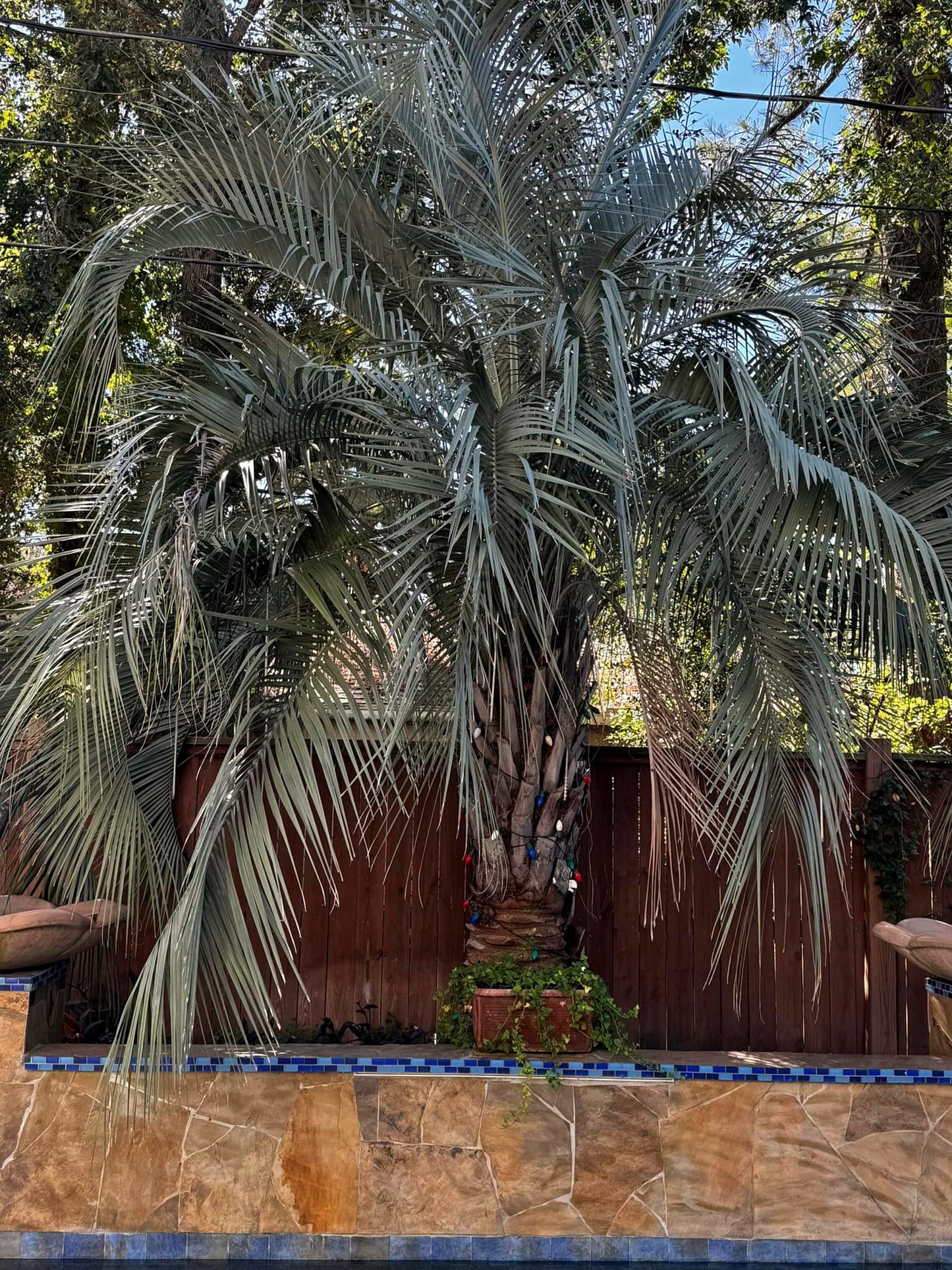
The Butia capitata, commonly known as the Jelly Palm or Pindo Palm, is one of the most cold-hardy feather palms in cultivation, valued for its graceful arching blue-green fronds, edible fruit, and strong landscape performance. Native to South America, this species is widely grown in both tropical and temperate regions for its exotic appearance and surprising cold tolerance.
Known for its elegant “weeping” crown of pinnate leaves, the Jelly Palm forms a stout solitary trunk topped with long, curved fronds that arch inward toward the canopy. This creates a soft, tropical silhouette that works beautifully in landscapes, poolside plantings, and container gardens.
In late spring, the tree produces clusters of yellow to reddish flowers that develop into small round fruits in summer. These fruits are sweet-tart and often described as having tropical flavors reminiscent of pineapple, apple, and banana. They are commonly used to make jelly, jams, and even fermented beverages, giving the plant its well-known common name.
This palm is especially valued for its ability to withstand cold temperatures compared to most feather palms, making it a popular choice for gardeners in cooler climates seeking a tropical aesthetic.
🌱 Growing & Care Information
Light: Full sun to partial shade
Soil: Widely adaptable; prefers well-drained soil
Water: Moderate; drought tolerant once established
Growth: Medium-growing ornamental fruit palm
Climate: Subtropical to temperate climates
Jelly Palm thrives in a wide range of soils and conditions, including urban and coastal environments. It is highly adaptable, low maintenance, and long-lived, often surviving for decades once established.
It performs well both in the ground and in large containers, where it can be kept smaller while still producing its signature tropical appearance.
🌿 Why Grow Jelly Palm?
• One of the most cold-hardy feather palms
• Produces edible jelly-making fruit
• Beautiful blue-green arching fronds
• Excellent poolside and landscape specimen
• Highly drought and urban tolerant
• Long-lived ornamental palm (decades)
• Great container or patio palm
• Tropical look in cooler climates
Jelly Palm remains one of the most reliable palms for gardeners seeking both ornamental beauty and edible fruit in a cold-hardy tropical plant.
USDA Hardiness Zones: 7b–11
Jelly Palm Germination:
Soak the seeds in a bowl of clean water for seven days. Change the water every morning to ensure it stays fresh before starting. Some have found it better to crack the hard seed coat before hand to help facilitate germination, while it has recently been found that complete removal of the hard seed coat can also increase germination rates dramatically. Use a heated propagator under the soil. The time needed for germination can be sped up dramatically using a heated propagator set to the Optimal temperature of 100-104 F at all times after being placed into soil.
1) Mix 1/2 cup of bleach with five cups of water. Place the seeds in a strainer and pour the bleach mixture over them. The bleach will sterilize the outside of the seeds and prevent mold growth. If layer of skin is still present, just peel it off.
2) Place the Seeds in a strainer and pour the bleach mixture over them.
3) Fill a pot with high quality potting soil & plant the seeds so they are level with the soil surface. The seeds do not have to be completely covered to germinate.
4) Use a Heated Propagator to keep the temperature as as close to 104 degrees F as possible. The seeds should not be in sunlight as they are at risk for drying out. Water the soil until it is damp to the touch. The soil must stay damp (not wet), at all times throughout the germination process. Also periodically check them once a month to be sure they are free of mold or fungus. If found, clean infected seeds with a copper based fungicide, then rinse them off very well and place them back into new & sterile potting mix.
5) Be patient--it can take a month for some, while most will take up to 100 days or more to germinate as with any Exotic or Tropical seeds. The Jelly Palm is Most Definitely Worth the Wait!
Germinación de la palma de gelatina:
Remoje las semillas en un recipiente con agua limpia durante siete días. Cambie el agua todas las mañanas para asegurarse de que se mantenga fresca antes de comenzar. Algunos han descubierto que es mejor romper la capa dura de la semilla antes de hacerlo para facilitar la germinación, mientras que recientemente se ha descubierto que la eliminación completa de la capa dura de la semilla también puede aumentar drásticamente las tasas de germinación. Use un propagador calentado debajo de la tierra. El tiempo necesario para la germinación se puede acelerar drásticamente utilizando un propagador calentado configurado a la temperatura óptima de 100-104 F en todo momento después de colocarlo en la tierra.
1) Mezcle 1/2 taza de lejía con cinco tazas de agua. Coloque las semillas en un colador y vierta la mezcla de lejía sobre ellas. La lejía esterilizará el exterior de las semillas y evitará el crecimiento de moho. Si todavía hay una capa de piel, simplemente quítela.
2) Coloque las semillas en un colador y vierta la mezcla de lejía sobre ellas.
3) Llene una maceta con tierra para macetas de alta calidad y plante las semillas de manera que queden al mismo nivel que la superficie de la tierra. No es necesario cubrir completamente las semillas para que germinen.
4) Use un propagador calefaccionado para mantener la temperatura lo más cerca posible de los 104 grados F. Las semillas no deben estar a la luz del sol, ya que corren el riesgo de secarse. Riegue la tierra hasta que esté húmeda al tacto. La tierra debe permanecer húmeda (no mojada) en todo momento durante el proceso de germinación. También revíselas periódicamente una vez al mes para asegurarse de que no tengan moho ni hongos. Si encuentra semillas infectadas, limpie las semillas infectadas con un fungicida a base de cobre, luego enjuáguelas muy bien y vuelva a colocarlas en una mezcla para macetas nueva y esterilizada.
5) Sea paciente: puede llevar un mes para algunas, mientras que la mayoría tardará hasta 100 días o más en germinar, como co
Share