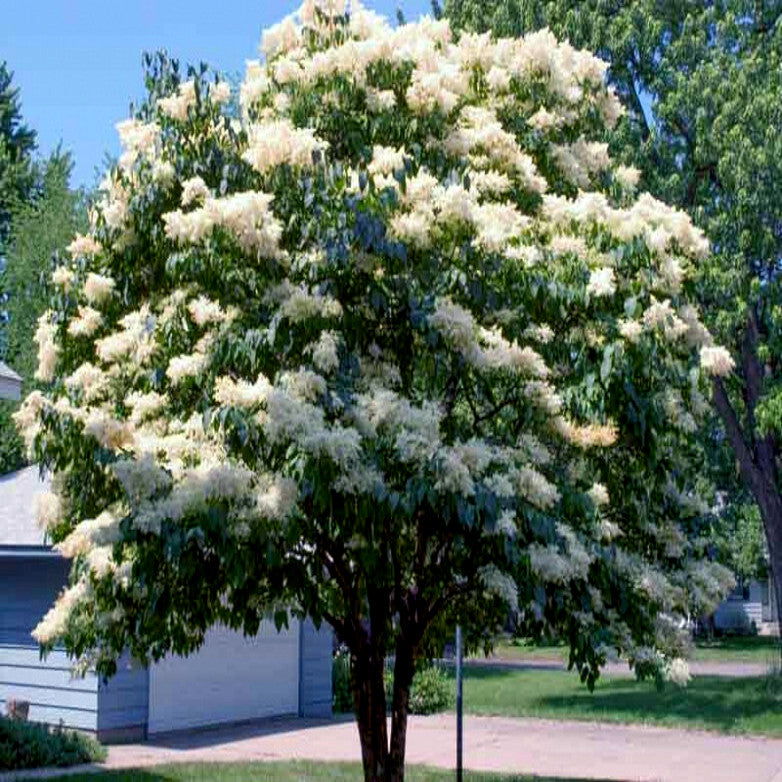
Japanese White Lilac Tree Seeds Flower Plant Cold Hardy Fragrant Ornamental Shrub
Japanese White Lilac Tree Seeds Flower Plant Cold Hardy Fragrant Ornamental Shrub
Couldn't load pickup availability
Japanese White Lilac Tree Seeds (Syringa reticulata)
The Syringa reticulata, commonly known as the Japanese Tree Lilac, is a highly ornamental deciduous flowering tree valued for its large creamy-white flower clusters, exceptional cold hardiness, and elegant landscape presence. Native to Japan, this unique lilac species is larger than traditional shrub lilacs and blooms later in the season, extending the ornamental flowering period in gardens and landscapes.
Known for its showy panicles of creamy-white, highly fragrant flowers, Japanese Lilac produces abundant blooms in early summer that attract butterflies, hummingbirds, and other pollinators. The flowers are held in large upright clusters that stand out beautifully against the tree’s dark green foliage.
This species typically grows 25–30 feet tall with a spread of up to 15 feet, forming a rounded or multi-stemmed ornamental tree. Its reddish-brown bark develops distinctive horizontal lenticels, adding year-round visual interest even when not in bloom.
The foliage is deep green with a slightly drooping habit, providing a lush ornamental canopy through summer before transitioning into seasonal dormancy. The tree is widely appreciated for its resilience and ability to thrive in urban environments, clay soils, and colder climates.
🌱 Growing & Care Information
Light: Full sun to partial shade (best flowering in full sun)
Soil: Well-drained soil; tolerates clay and urban conditions
Water: Moderate; adaptable once established
Growth: Moderate-growing deciduous ornamental tree
Climate: Extremely cold hardy temperate climates
Japanese Tree Lilac is highly adaptable and low maintenance once established. It performs best in full sun with good air circulation to maximize flowering. It is often used as a specimen tree, street tree, hedge accent, or patio landscape focal point.
🌿 Why Grow Japanese Tree Lilac?
• Large fragrant creamy-white flower clusters
• Attracts butterflies and hummingbirds
• Extremely cold hardy and reliable bloomer
• Excellent urban and clay soil tolerance
• Beautiful ornamental bark year-round
• Great specimen, hedge, or street tree
• Low maintenance and “trouble-free” lilac
• Late-season bloom extends garden color
Japanese Tree Lilac is one of the most dependable flowering ornamental trees for cold climates, offering beauty, fragrance, and strong landscape performance.
USDA Hardiness Zones: 3–7
Japanese Lilac Germination:
1) Let seeds soak in water for 24 hours.
2) Stratify seeds by placing them in zip lock bag of "moist" peat moss or vermiculite. Place them in the fridge for 90 days. Cut a few tiny holes in the bag for air circulation & periodically check them to be sure they are staying moist, never drying out. "Not wet, just Moist" A spray bottle works best to lightly mist them.
3) Plant seeds 1/4" deep in a well mixed & well draining seed starting mix, keeping them no less than 65 degrees F.
4) Germination will occur between 14-45 days. If some sprout early, don't toss out the rest as they're still good and just need more time.
Germinación de las lilas:
1) Deje las semillas en remojo en agua durante 24 horas.
2) Estratifique las semillas colocándolas en una bolsa con cierre hermético llena de turba o vermiculita "húmeda". Colóquelas en el refrigerador durante 90 días. Haga unos pequeños agujeros en la bolsa para que circule el aire y revíselas periódicamente para asegurarse de que se mantengan húmedas y que nunca se sequen. "No mojadas, solo húmedas". Una botella rociadora funciona mejor para rociarlas ligeramente.
3) Plante las semillas a 1/4" de profundidad en una mezcla para semillas bien mezclada y con buen drenaje, manteniéndolas a no menos de 65 grados F.
4) La germinación ocurrirá entre 14 y 45 días. Si algunas brotan antes, no deseche el resto, ya que todavía están en buen estado y solo necesitan más tiempo.
Share