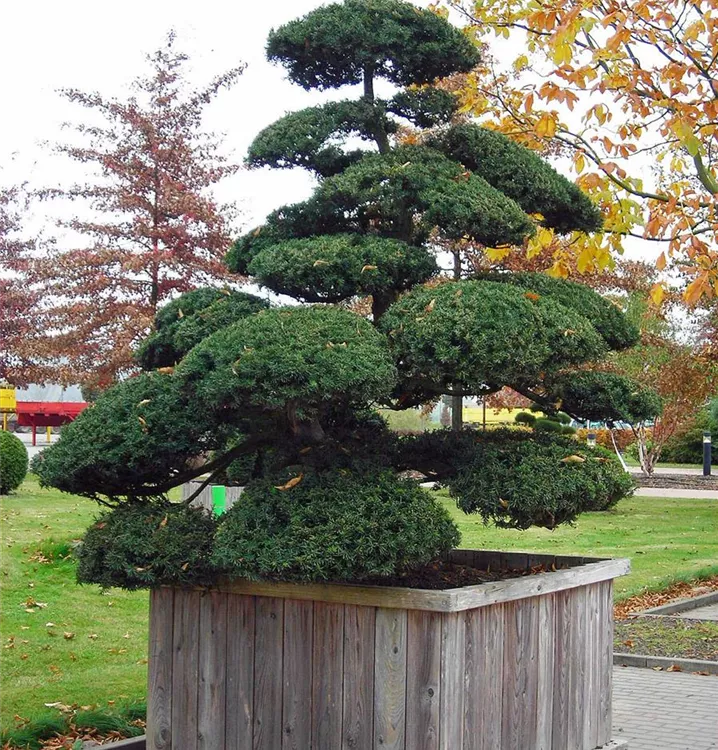
Japanese Spreading Yew Tree Seeds (Taxus cuspidata) Evergreen Bonsai & Landscape Plant
Japanese Spreading Yew Tree Seeds (Taxus cuspidata) Evergreen Bonsai & Landscape Plant
Couldn't load pickup availability
JAPANESE SPREADING YEW TREE SEEDS (Taxus cuspidata)
The Japanese Spreading Yew (Taxus cuspidata) is a highly prized evergreen shrub and small tree valued for its dense dark green foliage, exceptional longevity, and outstanding response to pruning and shaping. Native to Japan, Korea, China, and parts of Russia, this classic ornamental species has been cultivated for centuries in landscapes, formal gardens, and bonsai collections.
Known for its graceful spreading growth habit and rich evergreen color, Japanese Yew is widely used for privacy hedges, foundation plantings, topiary, and bonsai cultivation. When planted in groups or masses, it forms a thick year-round screen with a refined formal appearance when sheared, or a more natural shape when left untrimmed.
This species typically grows 10–25 feet tall with a spread of 5–10 feet, though it can be maintained at smaller sizes through pruning. The bark is attractive reddish-brown and becomes increasingly textured with age.
Female plants produce bright red berry-like arils that attract birds and wildlife. While ornamental and attractive to birds, the seeds and foliage are toxic if consumed by humans or pets.
🌱 Growing & Care Information
Light: Full sun to partial shade
Soil: Moist, well-drained soil
Water: Moderate; adaptable once established
Growth: Slow-growing evergreen shrub or small tree
Climate: Extremely cold hardy and shade tolerant
Japanese Yew is especially valued for its ability to thrive in shaded areas where many other evergreens struggle. It responds exceptionally well to shaping and pruning, making it one of the finest species for bonsai and formal hedging.
🌿 Why Grow Japanese Yew?
• Dense evergreen foliage year-round
• Excellent for bonsai, hedges, and topiary
• Extremely shade tolerant and cold hardy
• Long-lived ornamental evergreen
• Responds beautifully to pruning and shaping
The wood of Yew has historically been prized for its remarkable durability and strength, contributing to its legendary status in gardens and folklore.
USDA Hardiness Zones: 4–7
Yew Germination:
For optimal germination, soak the seeds in slightly hot water for 36-48 hours, followed by two months of cold stratification before sowing at 1/2" deep in a sand-loamy soil. For the best result with cold stratification, place in a sealed bag of moist peat moss, and place in the fridge at around 40-45 degrees F for around 60 days. Be sure to place 3-4 small holes in the bag. Any planting out is best done in late Spring or early Summer, after the last expected frosts. Keep damp soil, not soaking wet. Keep pot in warm situation 68-75°F. Germination of the Yes is erratic and can take several months, and some up to a year or more so patience is required.
Germinación del tejo:
Para una germinación óptima, remoje las semillas en agua ligeramente caliente durante 36 a 48 horas, seguido de dos meses de estratificación en frío antes de sembrar a 1/2" de profundidad en un suelo franco arenoso. Para obtener el mejor resultado con la estratificación en frío, colóquelas en una bolsa sellada con turba húmeda y colóquela en el refrigerador a unos 40-45 grados F durante unos 60 días. Asegúrese de hacer 3 o 4 agujeros pequeños en la bolsa. Es mejor plantar al aire libre a fines de la primavera o principios del verano, después de las últimas heladas esperadas. Mantenga la tierra húmeda, no empapada. Mantenga la maceta en una situación cálida de 68-75 °F. La germinación del tejo es errática y puede llevar varios meses, y en algunos casos hasta un año o más, por lo que se requiere paciencia.
Share