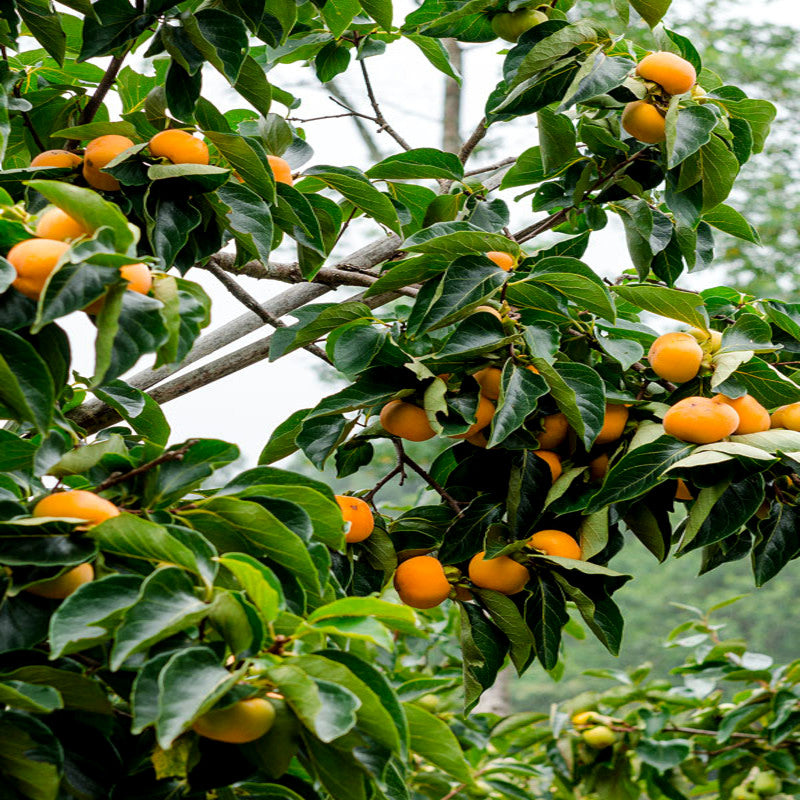
Japanese Persimmon Seeds (Diospyros kaki) – Hardy Asian Garden Fruit Tree
Japanese Persimmon Seeds (Diospyros kaki) – Hardy Asian Garden Fruit Tree
Couldn't load pickup availability
JAPANESE PERSIMMON TREE SEEDS (Diospyros kaki)
The Japanese Persimmon (Diospyros kaki), also known as Kaki or Oriental Persimmon, is a highly prized fruit tree valued for both its delicious edible fruit and outstanding ornamental beauty. This deciduous tree creates a stunning display in autumn, when its leaves drop to reveal bright orange fruits hanging throughout the bare branches.
Growing to 20–30 feet tall with a rounded, spreading canopy, this tree is an excellent choice as a landscape specimen or home orchard addition. Its glossy green leaves emerge in spring, mature through summer, and turn vibrant shades of gold, orange, and red in fall, adding seasonal interest.
The large, attractive fruits (3–4 inches wide) ripen in late fall and may remain on the tree into winter, creating a striking visual effect. Widely cultivated across Asia and beyond, this species produces the persimmons commonly found in markets today.
🌱 Growing & Care Information
Light: Full sun preferred
Soil: Well-drained soil; adaptable to various soil types
Water: Moderate; prefers consistent moisture when establishing
Growth: Medium-sized deciduous tree
Climate: Best suited for warm temperate climates
Japanese Persimmon trees are relatively easy to grow and thrive in sunny locations with good drainage. Fruits may be astringent or non-astringent depending on variety, and are enjoyed fresh or used in a wide range of culinary dishes.
🌿 Why Grow Japanese Persimmon?
• Produces large, sweet, edible fruit
• Stunning ornamental value with fall color and winter edible fruit display
• Ideal for home orchards and landscape specimen planting
• Widely cultivated and highly desirable fruit tree
• Adaptable and relatively easy to grow
USDA Hardiness Zones: 7–10
Persimmon Germination:
1) Persimmon seeds have a relatively low germination rate of 25 to 35 percent, so start multiple seeds to increase the likelihood of success with each grow.
2) Wrap the seeds in moistened sphagnum moss or paper towel, then put them in a plastic bag or jar inside the refrigerator for three months. If the moss or paper towel dries out, spritz it with some water to keep the persimmon seeds moist.
3) Persimmon seedlings form a long taproot early on, so they need to be grown in tall plastic containers that will allow the root to form without cramping it. Sow one seed per pot in sterile potting mixture, and make sure the pot has drainage holes at the base. Plant the seeds at a depth of 2 inches, and then set the pots in a warm, bright location.
4) Use a heated propagator to keep the temperature above 75 degrees Fahrenheit. Tiny persimmon seedlings should appear in six to eight weeks.
Germinación del caqui:
1) Las semillas de caqui tienen una tasa de germinación relativamente baja, del 25 al 35 por ciento, por lo que es mejor comenzar a sembrar varias semillas para aumentar la probabilidad de éxito con cada cultivo.
2) Envuelva las semillas en musgo sphagnum humedecido o en una toalla de papel, luego colóquelas en una bolsa de plástico o un frasco dentro del refrigerador durante tres meses. Si el musgo o la toalla de papel se secan, rocíelos con un poco de agua para mantener húmedas las semillas de caqui.
3) Las plántulas de caqui forman una raíz pivotante larga desde el principio, por lo que deben cultivarse en recipientes de plástico altos que permitan que la raíz se forme sin apretujarla. Siembre una semilla por maceta en una mezcla para macetas esterilizada y asegúrese de que la maceta tenga orificios de drenaje en la base. Plante las semillas a una profundidad de 2 pulgadas y luego coloque las macetas en un lugar cálido y luminoso.
4) Use un propagador calentado para mantener la temperatura por encima de los 75 grados Fahrenheit. Las pequeñas plántulas de caqui deberían aparecer en seis a ocho semanas.
Share