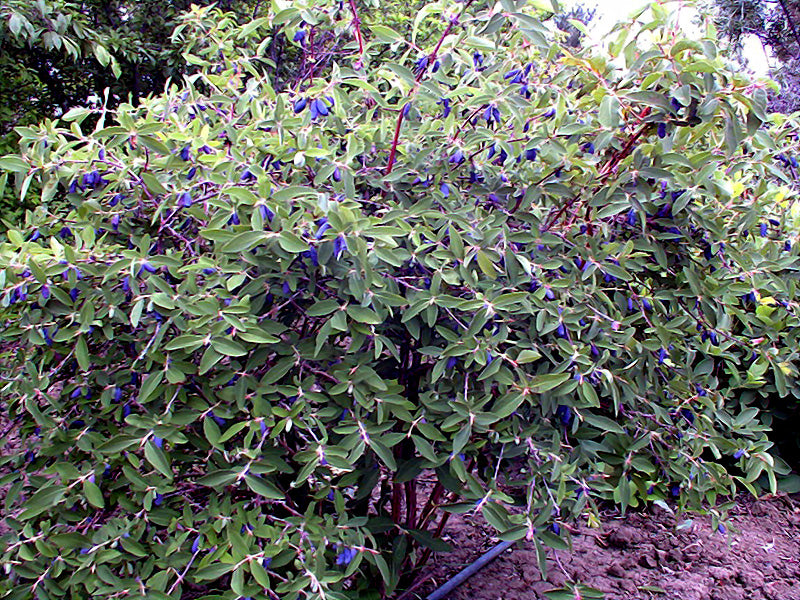
BLUE HONEYBERRY SEEDS (Lonicera caerulea)
The Honeyberry (Lonicera caerulea), also known as Haskap or Blue Honeysuckle, is a cold-hardy edible fruit shrub prized for producing one of the earliest ripening berries of the season. Native to northern climates including Siberia, Japan, and Canada, this extremely tough perennial is valued for its ability to thrive in harsh conditions, surviving temperatures down to -40°F.
This deciduous shrub produces elongated, blueberry-like fruits that are deep blue with a natural waxy bloom. The berries ripen in late spring to early summer, often weeks before strawberries and blueberries, making them one of the first fresh fruits available in the garden each year.
Honeyberries have a sweet-tart flavor profile, often compared to a blend of blueberry, raspberry, and black currant. They are widely regarded as a superfruit.
🌱 Growing & Care Information
Light: Full sun to partial shade
Soil: Well-drained, slightly acidic to neutral soil
Water: Moderate; prefers consistent moisture
Growth: Multi-stemmed deciduous shrub
Pollination: Requires two compatible varieties for best fruiting
Climate: Extremely cold hardy and highly adaptable
Honeyberries are easy to grow and are ideal for northern gardens, edible landscapes, and survival food plantings. They are also highly attractive to pollinators, especially early-season bees when few other plants are in bloom.
🌿 Why Grow Honeyberry?
• One of the earliest fruiting berries each season
• Extremely cold hardy (survives Zone 2 winters)
• Known as a Superfruit
• Easy to grow, low maintenance shrub
• Excellent for home orchards and survival gardens
USDA Hardiness Zones: 2–7
Honeyberry Germination:
1) Soak seeds in water for 24 hours (most seeds will float due to how light they are, this is normal)
2) Cold stratify seeds. Because they are very tiny, we recommend placing the seeds in a moist paper towel. Then place the paper towel inside of the zip lock bag. Label and date the bag before placing inside of the fridge, while allow the seeds to stay inside fridge for 60 days.
3) Use seed starting mix and place seeds no more than 1/4" deep, keeping slightly moist.
4) Maintain temperatures between 65-70 degrees F. Expect germination within 2-8 weeks. (Some will sprout faster than others so don't toss out seeds that do not sprout first)
Germinación de la baya de miel:
1) Remoje las semillas en agua durante 24 horas (la mayoría flotarán debido a su ligereza; esto es normal).
2) Estratifique las semillas en frío. Como son muy pequeñas, recomendamos colocarlas en una toalla de papel húmeda. Luego, coloque la toalla de papel dentro de una bolsa con cierre hermético. Etiquete y feche la bolsa antes de guardarla en el refrigerador, donde las semillas permanecerán durante 60 días.
3) Use sustrato para germinación y coloque las semillas a una profundidad máxima de 0,6 cm, manteniéndolas ligeramente húmedas.
4) Mantenga la temperatura entre 18 y 21 °C. La germinación se espera entre 2 y 8 semanas. (Algunas germinarán más rápido que otras, así que no deseche las semillas que no germinen primero).