Gunnera manicata Seeds – Giant “Dinosaur Food” Plant | Rare Hardy Exotic Foliage Plant
Gunnera manicata Seeds – Giant “Dinosaur Food” Plant | Rare Hardy Exotic Foliage Plant
Couldn't load pickup availability
Gunnera manicata Seeds
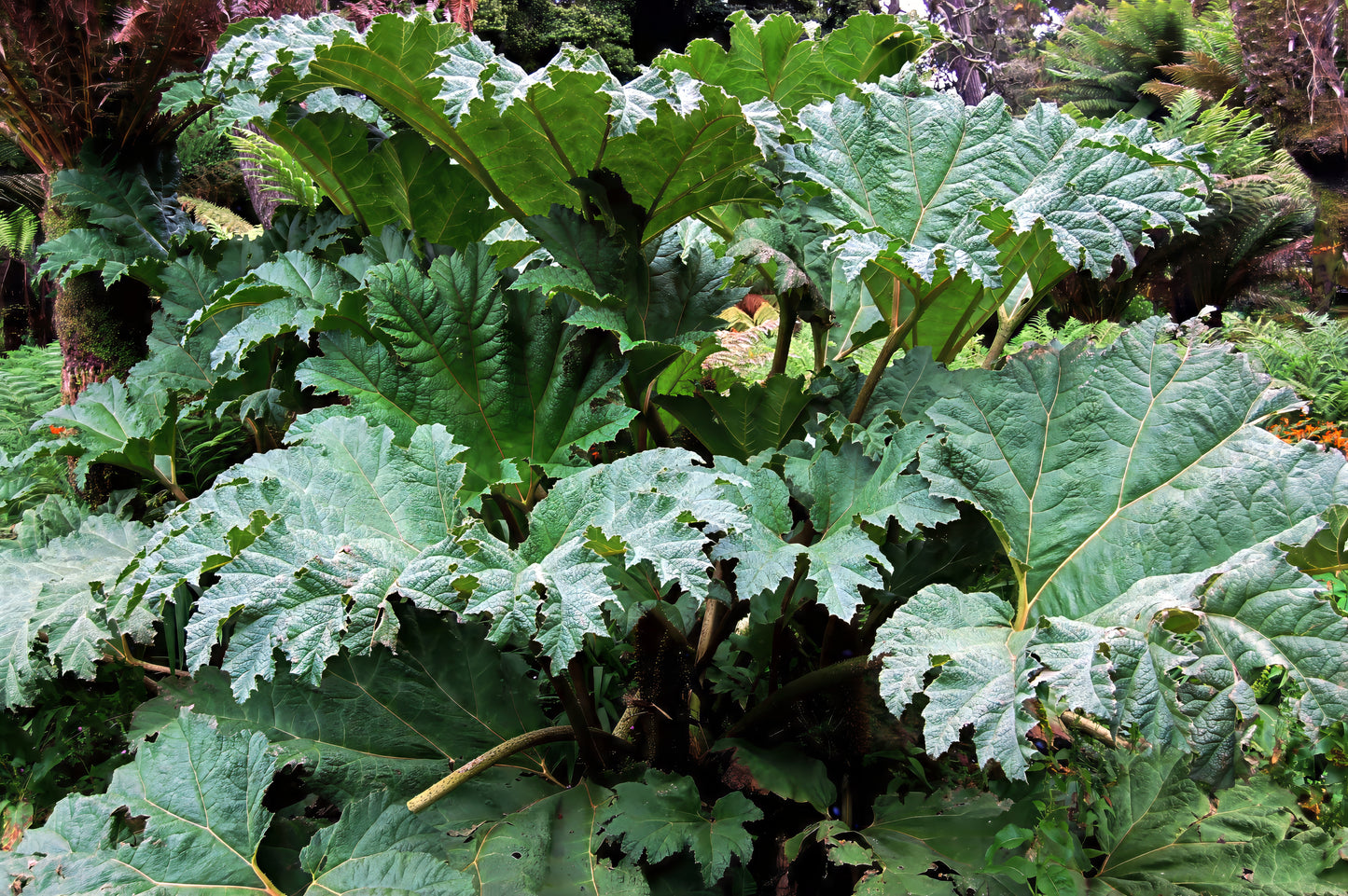
The Gunnera manicata, often called the “Dinosaur Food Plant” or Giant Rhubarb, is one of the most massive and dramatic ornamental plants in the world. This prehistoric-looking species produces enormous, deeply lobed green leaves that can reach up to 6 feet across, instantly transforming any landscape into a bold, jungle-like environment.
Thought to date back over 150 million years, this ancient plant was introduced into Europe in the 1800s and has remained a prized specimen for gardeners seeking extreme size and architectural impact. Thick, spiny stalks can grow up to 10 feet tall, forming huge clumps that dominate garden spaces and create unmatched visual presence.
In spring, Gunnera manicata produces large, upright bottle-brush flower spikes made up of tiny reddish-green blooms, followed by small red berry-like fruits. Despite the enormous plant size, the seeds are extremely fine—similar in size to poppy seeds.
🌱 Growing & Care Information
Light: Full sun to partial shade
Soil: Rich, consistently moist to wet soil; thrives in boggy conditions
Water: High; never allow soil to dry out
Placement: Ideal near ponds, streams, or damp garden areas
Space: Requires large growing area to reach full size
Winter Care: Protect crown with mulch or dead leaves in colder climates
Gunnera thrives in wet, nutrient-rich soil and performs best planted near water features, where its massive leaves can reflect and create a dramatic visual effect. While it prefers warmer climates, it can be grown in cooler regions with proper winter protection.
🌿 Why Grow Gunnera manicata?
• One of the largest ornamental plants in the world
• Massive 6-foot leaves create dramatic landscape impact
• Unique prehistoric “dinosaur plant” appearance
• Ideal for ponds, bog gardens, and tropical-style landscapes
• Rare and highly sought-after collector plant
USDA Hardiness Zones: 6–11 (Best in 9–11 with protection in colder zones)
Gunnera manicata Germination:
"Gunnera seeds are very tiny, with a germination rate of 35-40% in the proper conditions, so plant more than you need, & handle with care"
"Always use gloves when handling seed because the oils from your hands can easily ruin them and prevent germination."
1) Sow in a flat filled with good moistened compost mixed with vermiculite or perlite. Seeds should be lightly strewn at about one inch apart. Do not completely bury as these seeds "need light for germination" so you can simply lightly tamp them into soil or gently cover with a very thin fine layer of sand.
2) Use a heated propagator under your seed tray & cover the tray with plastic or glass and place where temperatures are 68 to 77 degrees F. at all times. The best Gunnera seed propagation is achieved in warmer temperatures. Bottom heat from the heated propagator will help speed germination.
3) Remove the plastic or glass once every day to allow air into the area and mist to keep moist. "Only use a spray bottle to mist them with." Being Gunnera manicata seeds are so tiny, even lightly watering will displace the seeds, causing them to sink deeper into the soil, which will cause them to rot, so only mist them to keep moist, and not overly wet.
5) As with most all Exotic seeds germination can be erratic so patience will be required for them. Germination can be quite quick for some seeds sprouting within 15 days, while most will take up to 90 days.
These Rare Prehistoric Giants are Definitely Worth the Wait!
"Please Contact us First if you need Anything"
Germinación de Gunnera manicata:
"Las semillas de Gunnera son muy pequeñas, con una tasa de germinación del 35-40% en condiciones adecuadas, así que plante más de lo necesario y manipúlelas con cuidado".
"Use siempre guantes al manipular las semillas, ya que la grasa de las manos puede dañarlas fácilmente e impedir la germinación".
1) Siembre en una bandeja llena de compost bien humedecido mezclado con vermiculita o perlita. Las semillas deben esparcirse ligeramente a una distancia de aproximadamente 2,5 cm. No las entierre completamente, ya que estas semillas "necesitan luz para germinar", así que simplemente apisónelas ligeramente en la tierra o cúbralas con una fina capa de arena.
2) Use un propagador calentado debajo de la bandeja de semillas, cúbrala con plástico o vidrio y colóquela en un lugar con temperaturas de entre 20 y 25 °C en todo momento. La mejor propagación de las semillas de Gunnera se logra en temperaturas más cálidas. El calor del propagador calentado en la base ayudará a acelerar la germinación. 3) Retire el plástico o el vidrio una vez al día para que circule el aire y rocíe para mantener la humedad. "Use solo un rociador para rociarlas". Dado que las semillas de Gunnera manicata son tan pequeñas, incluso un riego ligero las desplazará, hundiéndolas más profundamente en la tierra y pudriéndolas. Por lo tanto, rocíelas solo para mantenerlas húmedas, no demasiado mojadas.
5) Como ocurre con la mayoría de las semillas exóticas, la germinación puede ser irregular, por lo que se requiere paciencia. La germinación puede ser bastante rápida para algunas semillas, que brotan en 15 días, mientras que la mayoría tarda hasta 90 días.
¡Estos raros gigantes prehistóricos definitivamente valen la pena!
"Contáctenos primero si necesita algo".
Share