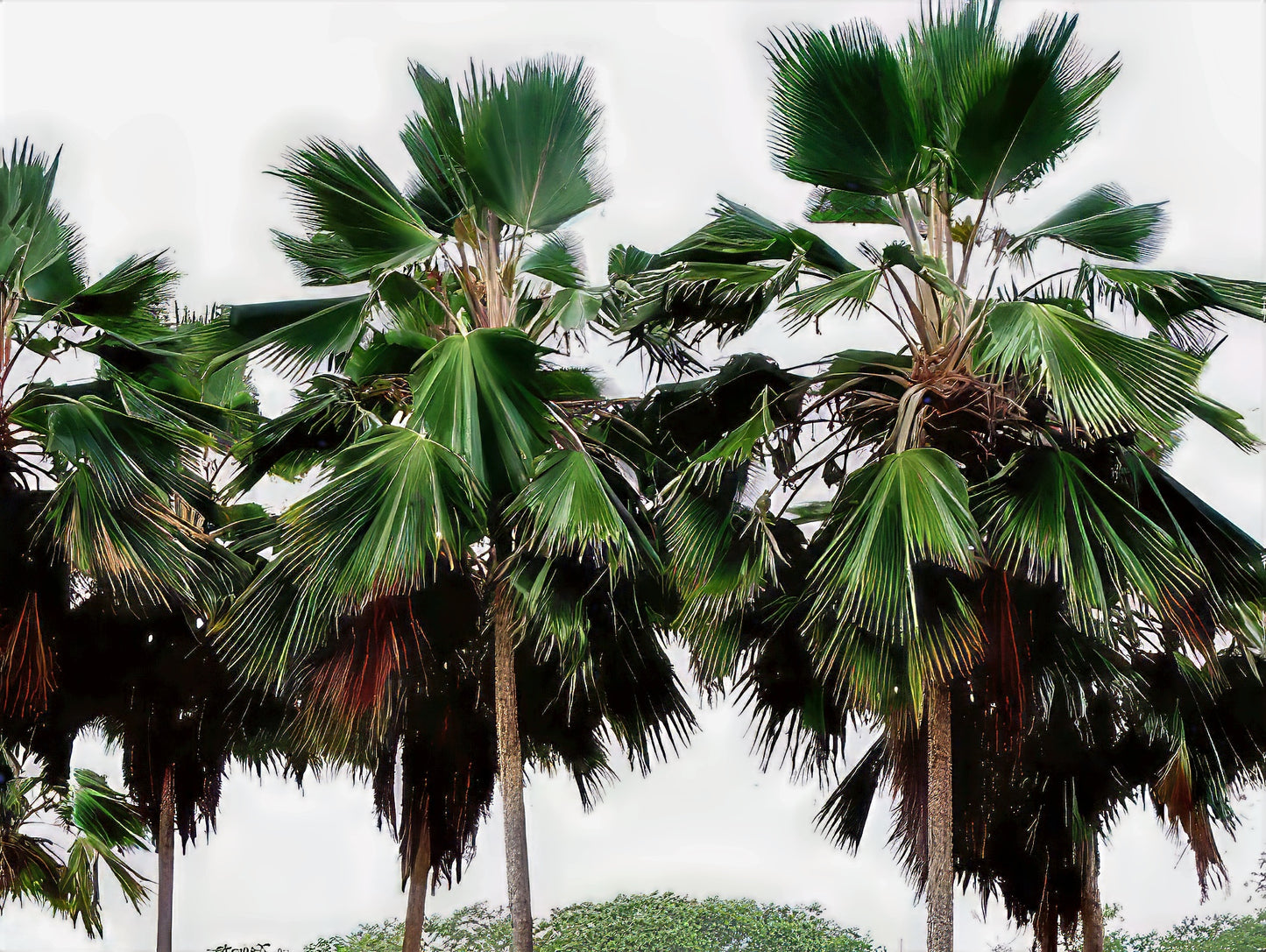
Fiji Fan Palm Tree Seeds (Pritchardia pacifica) Fast Growing Tropical Plant Ornamental
Fiji Fan Palm Tree Seeds (Pritchardia pacifica) Fast Growing Tropical Plant Ornamental
Couldn't load pickup availability
Fiji Fan Palm Tree Seeds (Pritchardia pacifica)
The Fiji Fan Palm (Pritchardia pacifica) is one of the world’s most striking fan palms, prized for its large, rounded, tropical fronds and island aesthetic. Native to the South Pacific and often associated with Hawaii, this palm is ideal for creating a lush tropical landscape, indoors or outdoors. It is especially tolerant of salty soils, making it perfect for coastal plantings or seaside gardens.
🌿 Key Features:
-
Botanical Name: Pritchardia pacifica
-
Common Name: Fiji Fan Palm
-
Growth Habit: Solitary single-trunk fan palm
-
Height: 10–20 feet at maturity
-
Spread: 5–10 feet wide
-
Trunk: Smooth, straight, ~20 inches in diameter with subtle fiber patterning at base
-
Foliage: Large palmate (fan-shaped) leaves, 6–7 feet wide
-
Leaf Color: Green to bright lime green
-
Petiole: Spineless
-
Use: Tropical landscaping, coastal planting, containers, indoor growing
-
Special Traits: Salt tolerant, fast-growing, highly ornamental
- Zones: 10-11
The Fiji Fan Palm develops a dense crown of 15–20 massive fronds, each with stiff yet graceful segments that create a bold tropical look. Unlike many other fan palms, it has no spines along the petioles, making it easier to handle in gardens or containers. Its straight, smooth trunk and lush fan-shaped leaves make it one of the most elegant and widely cultivated species in the Pritchardia genus. This palm grows quickly under ideal conditions, reaching its mature height in relatively few years, and adds a true tropical island feel to any landscape, patio, or indoor space.
Fiji Palm Germination:
Soak the seeds in a bowl of clean water for seven days. Be sure to change the water every morning to ensure it stays fresh before starting. Some have found it better to crack the hard seed coat before hand to help facilitate germination, while it has recently been found that complete removal of the hard seed coat can also increase germination rates dramatically. The time needed for germination can be sped up dramatically using a heated propagator set to the Optimal temperature of 100-104 F at all times after being placed into soil.
1) Mix 1/2 cup of bleach with five cups of water. Place the seeds in a strainer and pour the bleach mixture over them. The bleach will sterilize the outside of the seeds and prevent mold growth. If layer of skin is still present, just peel it off. 2) Place the Seeds in a strainer and pour the bleach mixture over them. 3) Fill a pot with high quality potting soil & plant the seeds so they are level with the soil surface. The seeds do not have to be completely covered to germinate. 4) Use a Heated Propagator to keep the temperature as as close to 104 degrees F as possible. The seeds should not be in sunlight as they are at risk for drying out. Water the soil until it is damp to the touch. The soil must stay damp (not wet), at all times throughout the germination process. 5) Be patient--it can take 2 months for some, while others will take over 3-4 months or more to germinate as with any Exotic or Tropical seeds. The Fiji Fan Palm is Well Worth the Wait!
Germinación de la palma de Fiji:
Remoje las semillas en un recipiente con agua limpia durante siete días. Asegúrese de cambiar el agua todas las mañanas para asegurarse de que se mantenga fresca antes de comenzar. Algunos han descubierto que es mejor romper la capa dura de la semilla antes de hacerlo para facilitar la germinación, mientras que recientemente se ha descubierto que la eliminación completa de la capa dura de la semilla también puede aumentar drásticamente las tasas de germinación. El tiempo necesario para la germinación se puede acelerar drásticamente utilizando un propagador calentado configurado a la temperatura óptima de 100-104 F en todo momento después de colocarlo en la tierra.
1) Mezcle 1/2 taza de lejía con cinco tazas de agua. Coloque las semillas en un colador y vierta la mezcla de lejía sobre ellas. La lejía esterilizará el exterior de las semillas y evitará el crecimiento de moho. Si aún queda una capa de piel, simplemente quítela. 2) Coloque las semillas en un colador y vierta la mezcla de lejía sobre ellas. 3) Llene una maceta con tierra para macetas de alta calidad y plante las semillas de manera que queden al mismo nivel que la superficie de la tierra. No es necesario cubrir completamente las semillas para que germinen. 4) Use un propagador calefaccionado para mantener la temperatura lo más cerca posible de los 104 grados F. Las semillas no deben estar a la luz del sol, ya que corren el riesgo de secarse. Riegue la tierra hasta que esté húmeda al tacto. La tierra debe permanecer húmeda (no mojada) en todo momento durante el proceso de germinación. 5) Sea paciente: puede llevar 2 meses para algunas, mientras que otras tardarán 3 o 4 meses o más en germinar, como ocurre con cualquier semilla exótica o tropical. ¡La palma de abanico de Fiji bien vale la espera!
Share