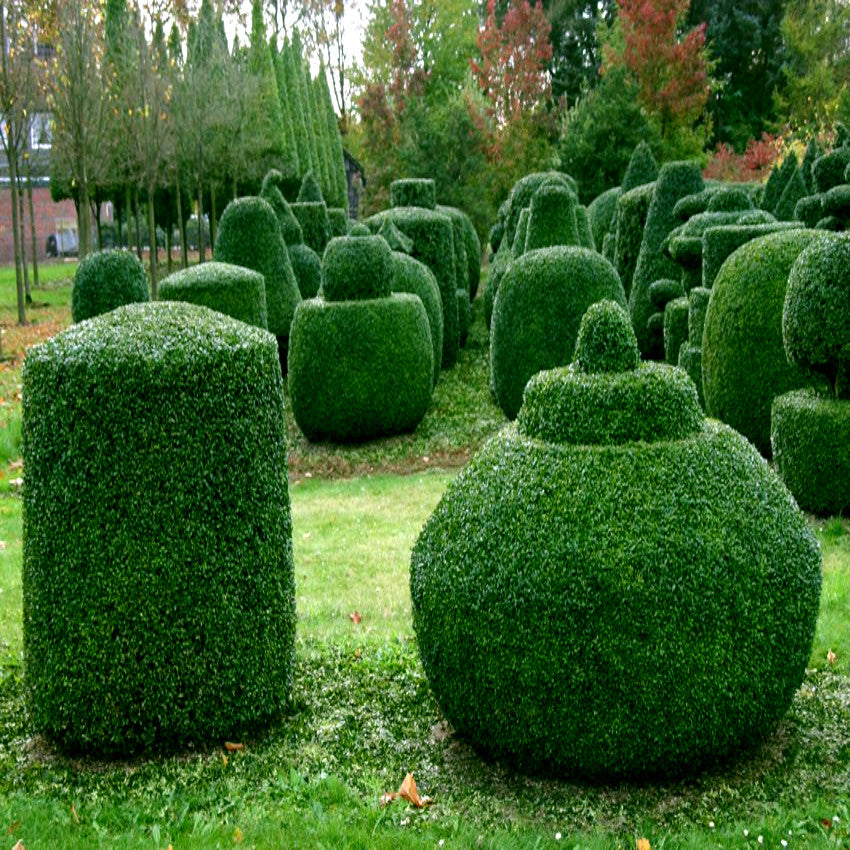
English Boxwood Seeds (Buxus sempervirens) – Hardy Evergreen Landscaping Shrub
English Boxwood Seeds (Buxus sempervirens) – Hardy Evergreen Landscaping Shrub
Couldn't load pickup availability
Common English Boxwood Seeds (Buxus sempervirens)
The Common English Boxwood (Buxus sempervirens) is one of the most widely grown evergreen landscape shrubs in the world, valued for its dense foliage, versatility, and ability to be shaped into formal designs. This classic garden plant is ideal for creating hedges, borders, foundation plantings, or ornamental focal points in both traditional and modern landscapes.
Boxwood has been cultivated since ancient times, with records of use dating back to Egypt around 4000 BC, where it was shaped into formal hedges. Throughout history, it has also been used for wood carving, precision tools, and decorative landscaping, making it both functional and ornamental.
This slow-growing evergreen thrives in a wide range of conditions and is known for its ability to maintain a neat, compact form with minimal maintenance. Its dense green foliage makes it especially popular for structured garden designs and year-round visual appeal.
🌱 Growing & Care Information
Light: Full sun to partial shade
Soil: Well-drained loamy soil; adaptable to most soil types
Water: Moderate; prefers consistent moisture but well-drained conditions
Mulching: Apply organic mulch to protect shallow roots and retain moisture
Spacing: Can be shaped into hedges or grown as individual specimens
Climate: Best in temperate climates with some wind protection
Boxwood prefers dappled shade during the hottest part of the day, especially in warmer regions. Its shallow root system benefits from mulch protection and regular care to prevent drying out.
🌿 Why Grow English Boxwood?
• Classic evergreen hedge and topiary plant
• Extremely versatile for formal landscaping
• Dense, year-round green foliage
• Low maintenance once established
• Ideal for borders, hedges, and foundation plantings
USDA Hardiness Zones: 5–9
Boxwood Germination:
1) Sand the seed shells with sandpaper to scarify, and soak them for 24 hours in warm water.
2) Place inside of a zip lock bag filled with moist peat moss or vermiculite. Then place inside of the fridge for 60 days to cold stratify. Periodically check to ensure they don't dry out, but mist with a sprayer as to not keep them wet. Just moist.
3) Plant no more than 1/8" inch deep in well mixed and well draining seed starting mix.
4) Use a heated propagator to keep the soil at 75 degrees F.
5) Boxwood germination is erratic and patience is required. Expect some to germinate within 3-4 weeks, while others can take up to 3 months, so never throw out any that don't germinate quickly.
Germinación del boj:
1) Lije las cáscaras de las semillas con papel de lija para escarificarlas y déjelas en remojo durante 24 horas en agua tibia.
2) Colóquelas dentro de una bolsa con cierre hermético llena de turba húmeda o vermiculita. Luego, colóquelas dentro del refrigerador durante 60 días para estratificarlas en frío. Revíselas periódicamente para asegurarse de que no se sequen, pero rocíelas con un rociador para que no se mojen. Solo que estén húmedas.
3) Plántelas a no más de 1/8" de pulgada de profundidad en una mezcla para semillas bien mezclada y con buen drenaje.
4) Use un propagador calentado para mantener la tierra a 75 grados F.
5) La germinación del boj es errática y se requiere paciencia. Espere que algunas germinen en 3 o 4 semanas, mientras que otras pueden tardar hasta 3 meses, así que nunca deseche las que no germinen rápidamente.
Share