CHINESE BLUE WISTERIA TREE SEEDS (Wisteria sinensis) Fast-Growing Flowering Vine Hardy Climber
CHINESE BLUE WISTERIA TREE SEEDS (Wisteria sinensis) Fast-Growing Flowering Vine Hardy Climber
Couldn't load pickup availability
Chinese Blue Wisteria Tree Seeds (Wisteria sinensis)
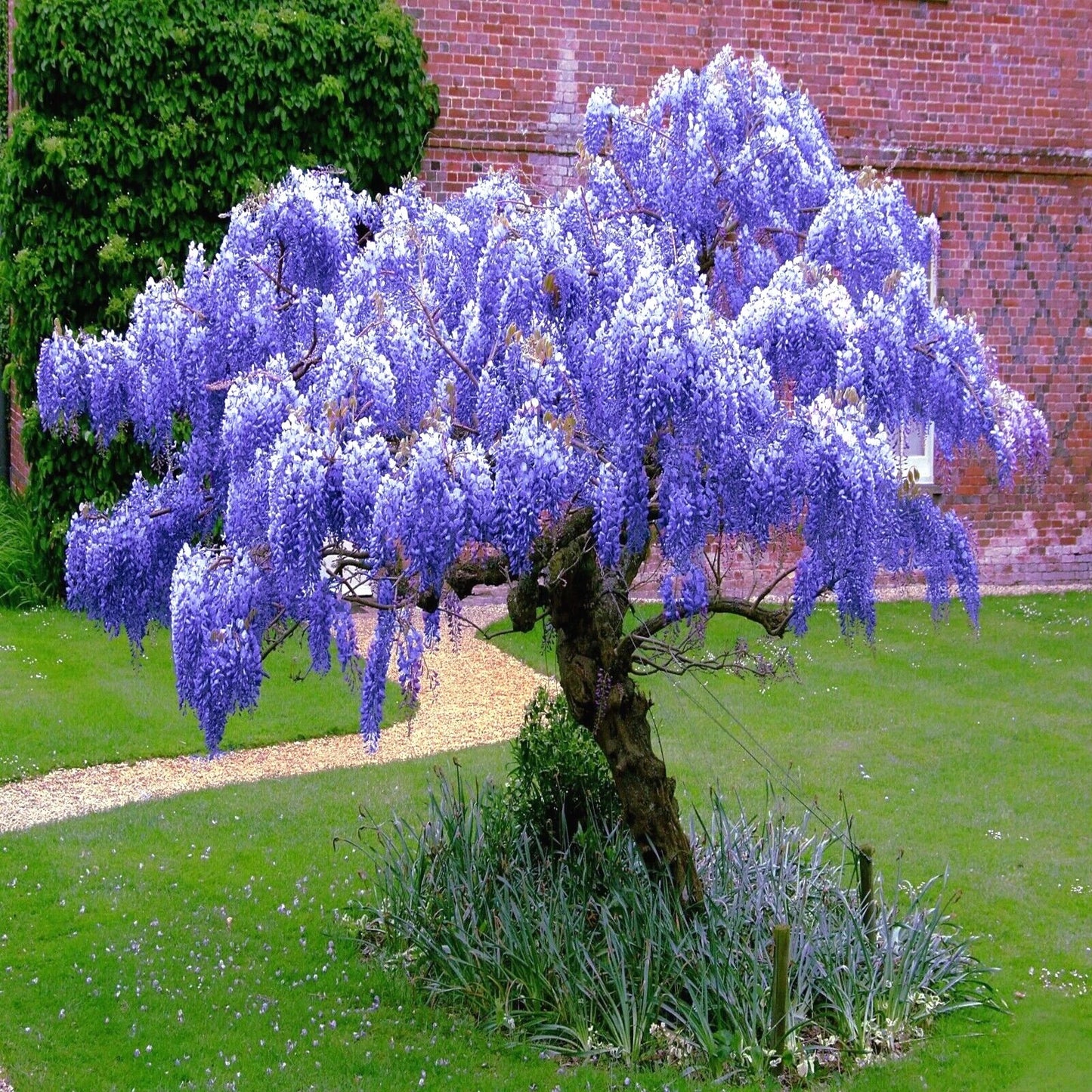
Chinese Blue Wisteria (Wisteria sinensis) is one of the most breathtaking flowering vines in the world, prized for its cascading clusters of fragrant blue-violet flowers and vigorous growth habit. Native to China and introduced to the United States in 1816, this long-lived deciduous vine has become a classic choice for pergolas, arbors, walls, fences, and trained “tree-form” specimens.
This woody twining vine climbs vigorously in a clockwise direction, reaching heights of 60 feet or more when given support. With proper pruning and training, Chinese Wisteria can also be shaped into a stunning small tree or an exceptional bonsai specimen. Once established, it is extremely durable and can live 50 years or longer.
In spring, Chinese Wisteria produces dramatic, dangling racemes of showy flowers that bloom all at once, creating an unforgettable display. Flower clusters range from 4 to 20 inches long, emerging as the leaves unfold. The lightly scented blooms make this vine a standout focal point in any landscape.
🌿 Key Features:
-
Botanical Name: Wisteria sinensis
-
Common Name: Chinese Blue Wisteria
-
Plant Type: Deciduous woody flowering vine
-
Growth Habit: Fast-growing, twining climber (can be trained as a tree)
-
Height: Up to 60+ feet with support
-
Flowers: Blue-violet, fragrant, hanging clusters
-
Bloom Time: Spring
-
Longevity: Long-lived perennial (50+ years)
-
Uses: Pergolas, arbors, walls, fences, trees, bonsai
Chinese Wisteria thrives in full sun, which promotes the heaviest flowering, though established plants will tolerate partial shade. It adapts to a wide range of soils but performs best in deep, loamy, well-drained soil with moderate moisture. Once mature, it is hardy, resilient, and capable of transforming structures and landscapes with its dramatic floral displays.
Whether you’re creating a flowering canopy, training a living sculpture, or growing a statement bonsai, Chinese Blue Wisteria is a timeless, high-impact plant that rewards patience with unmatched beauty.
USDA Growing Zones: 5–9
Wisteria Germination:
1) Unlike many seeds, wisteria seeds don’t require very high temperatures to germinate. But, be Sure to Keep nighttime temperatures above 55 degrees Fahrenheit and daytime temperatures around 75 F.
2) The tough outer hulls need to be weakened slightly to allow the embryo inside to germinate. To scarify them, Rub a file against the edge of the seed to thin the shell works well. Be careful not to go too deep, which will prevent them from germinating.
3) After scarifying the seeds, soak them in hot water for 24 hours to hydrate and further soften the shell. Use a thermos to keep the water warm.
4) It’s best to start the seeds in individual 3-inch pots to give the seedlings plenty of space to grow for their first few weeks of life. Choose pots with drainage holes around the bottom and fill them with a soilless seed-starting mixture because it’s sterile, moisture retentive and free from weed seeds, unlike some standard potting soils.
5) Sow wisteria seeds 2 inches deep, then set the pots on a tray to catch any water that leaks from the drainage holes; then drizzle water into each pot to settle the soil.
6) Check the moisture level in the growing mixture every day and mist the soil with water whenever it feels mostly dry on the surface. Don’t let the soil dry out completely, but also don’t keep it dripping wet because the seeds might rot.
7) Wisteria seeds will take 1-2 Months to sprout, at which point, move the pots near a bright, sunny window to encourage growth.
"If you need Anything, Please Contact us First"
Germinación de glicinas:
1) A diferencia de muchas semillas, las semillas de glicina no requieren temperaturas muy altas para germinar. Pero asegúrese de mantener las temperaturas nocturnas por encima de los 55 grados Fahrenheit y las temperaturas diurnas alrededor de los 75 F.
2) Las cáscaras exteriores duras deben debilitarse ligeramente para permitir que el embrión en el interior germine. Para escarificarlas, frotar una lima contra el borde de la semilla para adelgazar la cáscara funciona bien. Tenga cuidado de no profundizar demasiado, ya que evitará que germinen.
3) Después de escarificar las semillas, remójelas en agua caliente durante 24 horas para hidratar y ablandar aún más la cáscara. Use un termo para mantener el agua caliente.
4) Es mejor comenzar a sembrar las semillas en macetas individuales de 3 pulgadas para darles a las plántulas mucho espacio para crecer durante sus primeras semanas de vida. Elija macetas con orificios de drenaje alrededor del fondo y llénelas con una mezcla para iniciar semillas sin tierra porque es estéril, retiene la humedad y no contiene semillas de malezas, a diferencia de algunas tierras para macetas estándar.
5) Siembre las semillas de glicina a 5 cm de profundidad, luego coloque las macetas en una bandeja para recoger el agua que se filtre por los orificios de drenaje; luego rocíe agua en cada maceta para asentar la tierra.
6) Controle el nivel de humedad en la mezcla de cultivo todos los días y rocíe la tierra con agua cuando sienta que está mayormente seca en la superficie. No deje que la tierra se seque por completo, pero tampoco la mantenga mojada porque las semillas podrían pudrirse.
Share