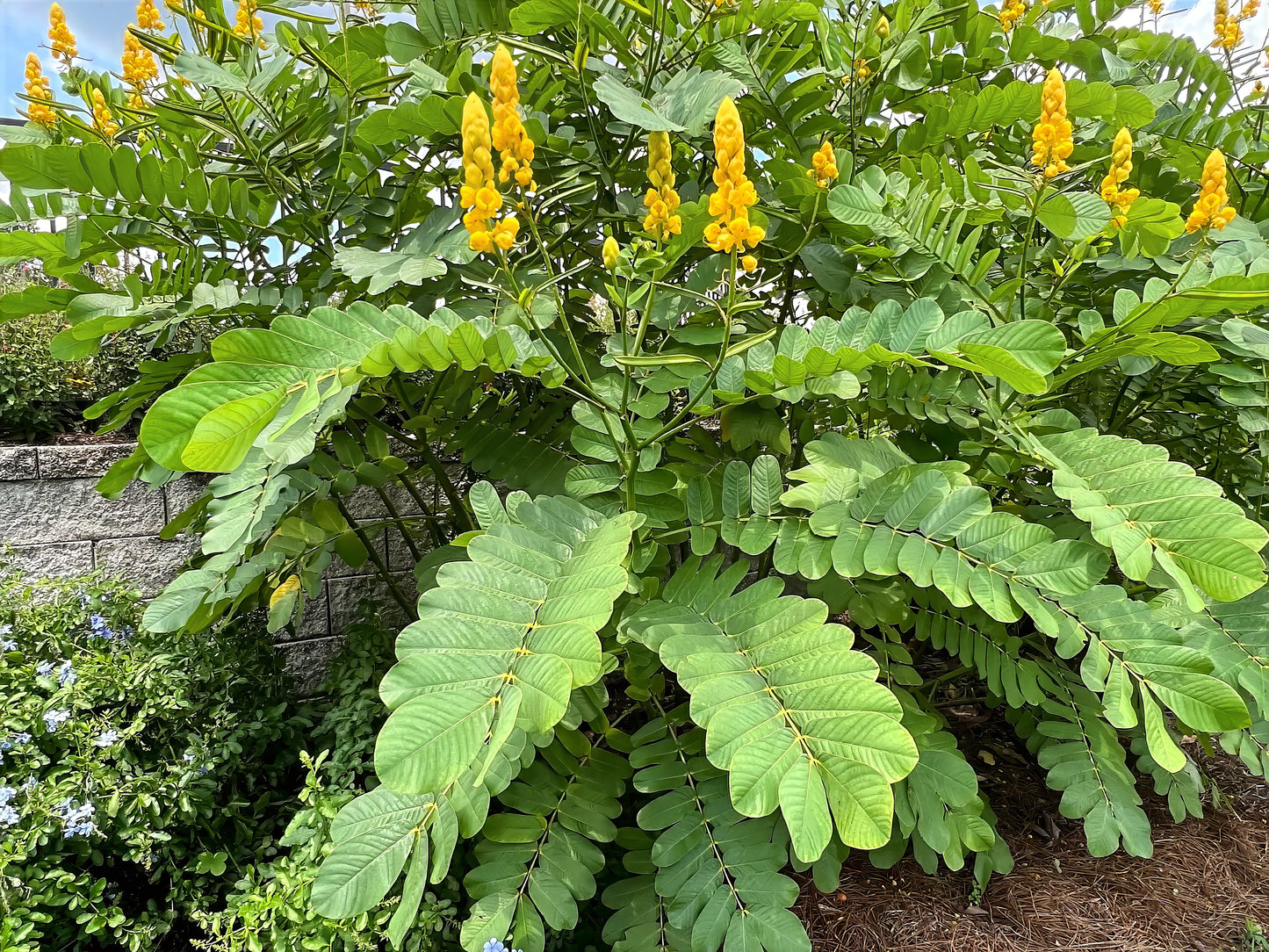
Candle Bush Seeds (Cassia alata) Fast Growing Tropical Senna Flower Plant | Butterfly Attracting Tree Shrub
Candle Bush Seeds (Cassia alata) Fast Growing Tropical Senna Flower Plant | Butterfly Attracting Tree Shrub
Couldn't load pickup availability
Candle Bush Seeds (Cassia alata)
Candlebush, also known as Senna alata is a striking tropical flowering shrub prized for its large candle-like yellow flower spikes, bold foliage, and rapid growth habit. Native to tropical regions of Central and South America, this dramatic ornamental plant has become widely cultivated throughout warm climates for both landscape beauty and pollinator attraction.
Known for its towering upright flower spikes resembling glowing yellow candles, Candle Bush produces brilliant golden-yellow blooms that stand prominently above the foliage for an extended flowering season. The flowers are highly attractive to butterflies, bees, and other pollinating insects, making the plant an excellent addition to pollinator gardens and tropical landscapes.
This species typically grows into a large shrub reaching up to 13 feet tall and wide in frost-free climates. The broad tropical leaflets are highly ornamental and display a fascinating habit of folding or closing during nighttime hours.
Candle Bush also produces long straight seed pods filled with small square-shaped seeds following the flowering period. In many tropical regions, the species has historically been valued in traditional herbal practices and medicinal gardens.
🌱 Growing & Care Information
Light: Full sun preferred
Soil: Well-drained fertile soil
Water: Moderate; appreciates regular moisture
Growth: Fast-growing tropical flowering shrub
Climate: Warm tropical and subtropical climates
Candle Bush thrives in hot sunny conditions and grows rapidly during warm weather. In cooler climates, it can be successfully grown in large containers and overwintered indoors with sufficient sunlight. Its tropical foliage and dramatic blooms make it an excellent patio or greenhouse specimen outside of frost-free regions.
🌿 Why Grow Candle Bush?
• Unique candle-shaped yellow flower spikes
• Excellent butterfly and pollinator plant
• Fast-growing tropical ornamental shrub
• Large dramatic tropical foliage
• Great for tropical and exotic gardens
• Easy to grow in warm climates
• Excellent container or patio specimen
• Long flowering season in warm weather
Candle Bush remains one of the most visually striking tropical flowering shrubs, admired for its unusual blooms, lush foliage, and strong pollinator appeal.
USDA Hardiness Zones: 10–12
Candle Bush Germination:
1) Gently rub with fine sandpaper. When the shell starts to change color, stop sanding.
2) Use a thermos to soak the seeds overnight in a bowl of 120-degree Fahrenheit water. Keep the seeds that sink to the bottom and throw away the seeds that float.
3) Plant seeds 2 inches apart in the moistened seed starting mix. Lightly cover with a very fine layer of moist soil.
4) Use a piece of plastic with a few tiny hole cut into it to cover and seal it shut to retain humidity.
5) Use a heated propagator mat to keep the soil temperature appx. 80 degrees F. during the day. Turning the heating mat off at night can greatly increase germination rates as it mimics their natural conditions using alternating temperatures.
6) Keep them under a bright light. (Not direct sunlight)
7) Germination should occur within 9-26 days. Remove the plastic once they are 2 inches tall.
"Please Contact us First if you need Anything"
Germinación de las semillas de Candle Bush:
1) Frote suavemente con papel de lija fino. Cuando la cáscara comience a cambiar de color, deje de lijar.
2) Use un termo para remojar las semillas durante la noche en un recipiente con agua a 120 grados Fahrenheit. Guarde las semillas que se hunden hasta el fondo y deseche las que flotan.
3) Plante las semillas a 2 pulgadas de distancia en la mezcla humedecida para iniciar las semillas. Cúbralas ligeramente con una capa muy fina de tierra húmeda.
4) Use un trozo de plástico con algunos agujeros pequeños cortados para cubrirlo y sellarlo para retener la humedad.
5) Use una estera de propagación calentada para mantener la temperatura del suelo a aproximadamente 80 grados F durante el día. Apagar la estera calefactora por la noche puede aumentar en gran medida las tasas de germinación, ya que imita sus condiciones naturales utilizando temperaturas alternas.
6) Manténgalas bajo una luz brillante. (No bajo la luz solar directa)
7) La germinación debería ocurrir dentro de los 9 a 26 días. Retire el plástico una vez que tengan 2 pulgadas de alto.
"Comuníquese con nosotros primero si necesita algo"
Share