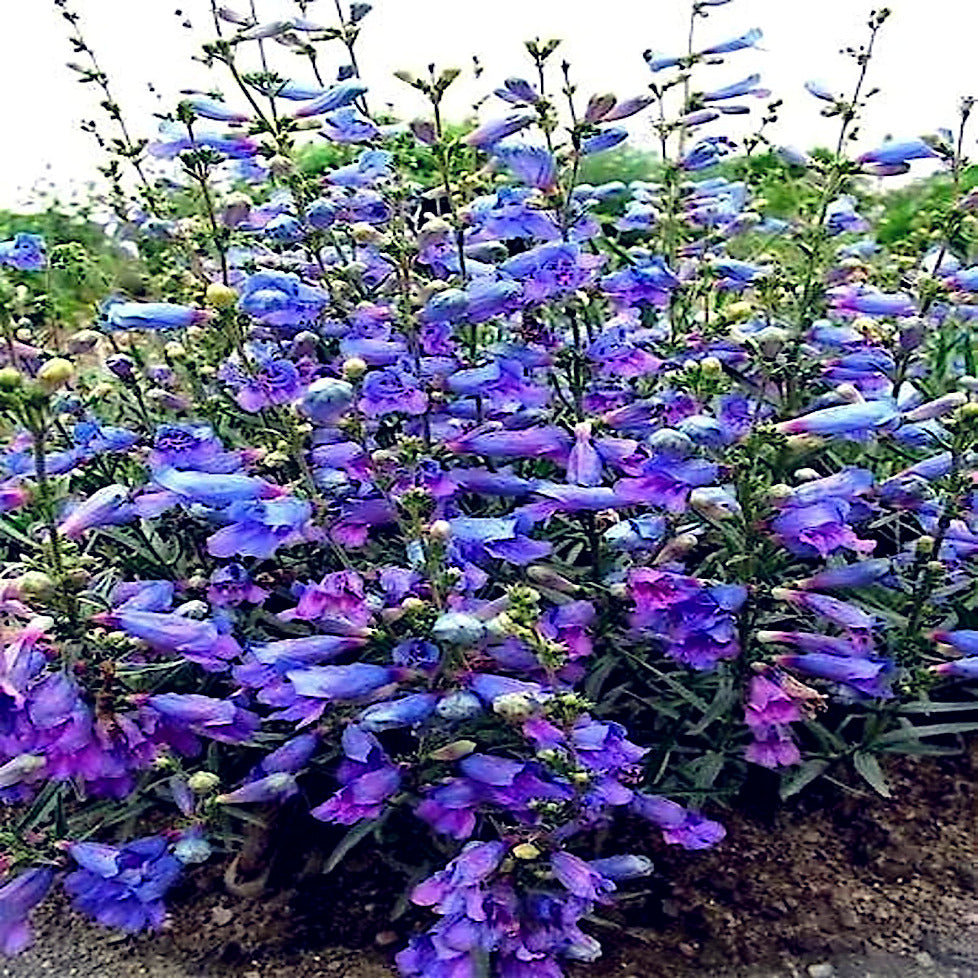
Blue Beardtongue Flower Seeds (Penstemon spectabilis) Native Wildflower Perennial | Butterfly & Hummingbird Garden Plant
Blue Beardtongue Flower Seeds (Penstemon spectabilis) Native Wildflower Perennial | Butterfly & Hummingbird Garden Plant
Couldn't load pickup availability
Blue Beardtongue Flower Seeds (Penstemon spectabilis)
The Penstemon spectabilis, commonly known as Blue Beardtongue or Showy Penstemon, is a striking native California wildflower prized for its tall spikes of vibrant blue to purple tubular blooms and its ability to thrive in harsh, dry conditions. This resilient perennial is widely used in native landscaping and pollinator gardens due to its long blooming season and high attraction to bees, butterflies, and hummingbirds.
Known for its elegant upright flower spikes, Blue Beardtongue produces clusters of wide-mouthed tubular blossoms that can reach up to one inch in length. These vivid flowers rise above narrow green foliage, creating a bold vertical accent in garden beds, borders, and naturalized landscapes.
Native to Southern California, this hardy perennial naturally grows in dry creek beds, rocky hillsides, and coastal bluffs. It is exceptionally drought tolerant once established and performs well in full sun with excellent drainage. Its adaptability allows it to withstand both heat and brief cold exposure, making it a reliable performer in challenging garden conditions.
Blue Beardtongue typically blooms in mid-spring through early summer, producing a long-lasting display of color that enhances wildlife activity throughout the blooming period.
🌱 Growing & Care Information
Light: Full sun
Soil: Well-draining, sandy or rocky soil preferred
Water: Low; drought tolerant once established
Growth: Medium-growing perennial
Climate: Dry, warm, and temperate climates
This species thrives in low-water landscapes and should not be overwatered. Good drainage is essential for healthy growth and long-term survival.
🌿 Why Grow Blue Beardtongue?
• Brilliant blue-purple tubular flower spikes
• Excellent pollinator plant for bees, butterflies, and hummingbirds
• Extremely drought tolerant native perennial
• Ideal for xeriscape and low-water gardens
• Long blooming seasonal color
• Strong performance in heat and poor soils
• Native California wildflower species
• Excellent border and naturalized landscape plant
USDA Hardiness Zones: 8–10
Beard Tongue Germination:
"Seeds are Tiny so Handle with Care"
1) Use more seeds than you want to plant as the germination rates are known to be low, and patience is needed for their erratic germination. Some may sprout within a month or two, but most can take all the way up to a year so don't toss out what doesn't sprout early as they're still good and just need more time.
2) Mix seeds and moistened soil together in a zip lock bag. To stratify, place in the refrigerator for 30 days.
3) Sow seeds into a well-drained, sandy compost and cover seeds with a very thin layer of sand or grit as they need bright light to germinate. Keep your grow light on for 12-14 hours a day.
4) Use a heated propagator to keep the soil around 75 degrees F during the day, and down to 40 degrees F at night. Temperature fluctuation has been known to help them as it mimics their natural environment.
5) Cover with a piece of plastic to help retain moisture. Check the soil every other day to be sure it stays moist, not wet. Be sure to mist them with a spray bottle so it doesn't wash the thin layer of sand off of the seeds.
6) Just be sure to keep the temperature fluctuating day & night, with bright light during the day, moist soil, and all you'll need is patience. Once they sprout, remove them into a separate container.
"Please Contact us First if you Need Anything"
Germinación de la lengua de barba:
"Las semillas son diminutas, así que manipúlelas con cuidado"
1) Use más semillas de las que desea plantar, ya que se sabe que las tasas de germinación son bajas y se necesita paciencia para su germinación errática. Algunas pueden brotar en un mes o dos, pero la mayoría puede tardar hasta un año, así que no deseche las que no broten pronto, ya que todavía están buenas y solo necesitan más tiempo.
2) Mezcle las semillas y la tierra humedecida en una bolsa con cierre hermético. Para estratificar, colóquelas en el refrigerador durante 30 días.
3) Siembre las semillas en un abono arenoso bien drenado y cúbralas con una capa muy fina de arena o gravilla, ya que necesitan luz brillante para germinar. Mantenga la luz de cultivo encendida durante 12 a 14 horas al día.
4) Use un propagador calentado para mantener la tierra a alrededor de 75 grados F durante el día y a 40 grados F por la noche. Se sabe que la fluctuación de temperatura las ayuda, ya que imita su entorno natural.
5) Cúbrelas con un trozo de plástico para ayudar a retener la humedad. Revisa la tierra cada dos días para asegurarte de que se mantenga húmeda, no mojada. Asegúrate de rociarlas con un rociador para que no se lleve la fina capa de arena de las semillas.
6) Asegúrate de mantener la temperatura fluctuando día y noche, con luz brillante durante el día, tierra húmeda y todo lo que necesitarás es paciencia. Una vez que broten, sácalas a un recipiente aparte.
"Comunícate con nosotros primero si necesitas algo"
Share