Black Cherry Tree Seeds (Prunus serotina) – Hardy Fast-Growing Native Fruit Tree Zones 3+
Black Cherry Tree Seeds (Prunus serotina) – Hardy Fast-Growing Native Fruit Tree Zones 3+
Couldn't load pickup availability
BLACK CHERRY TREE SEEDS (Prunus serotina)
The Black Cherry (Prunus serotina) is a fast-growing native North American tree valued for its beautiful timber, wildlife value, and edible fruit uses. Also known as Wild Black Cherry, this species is widely distributed across the United States and is one of the most important wildlife-supporting trees in eastern forests.
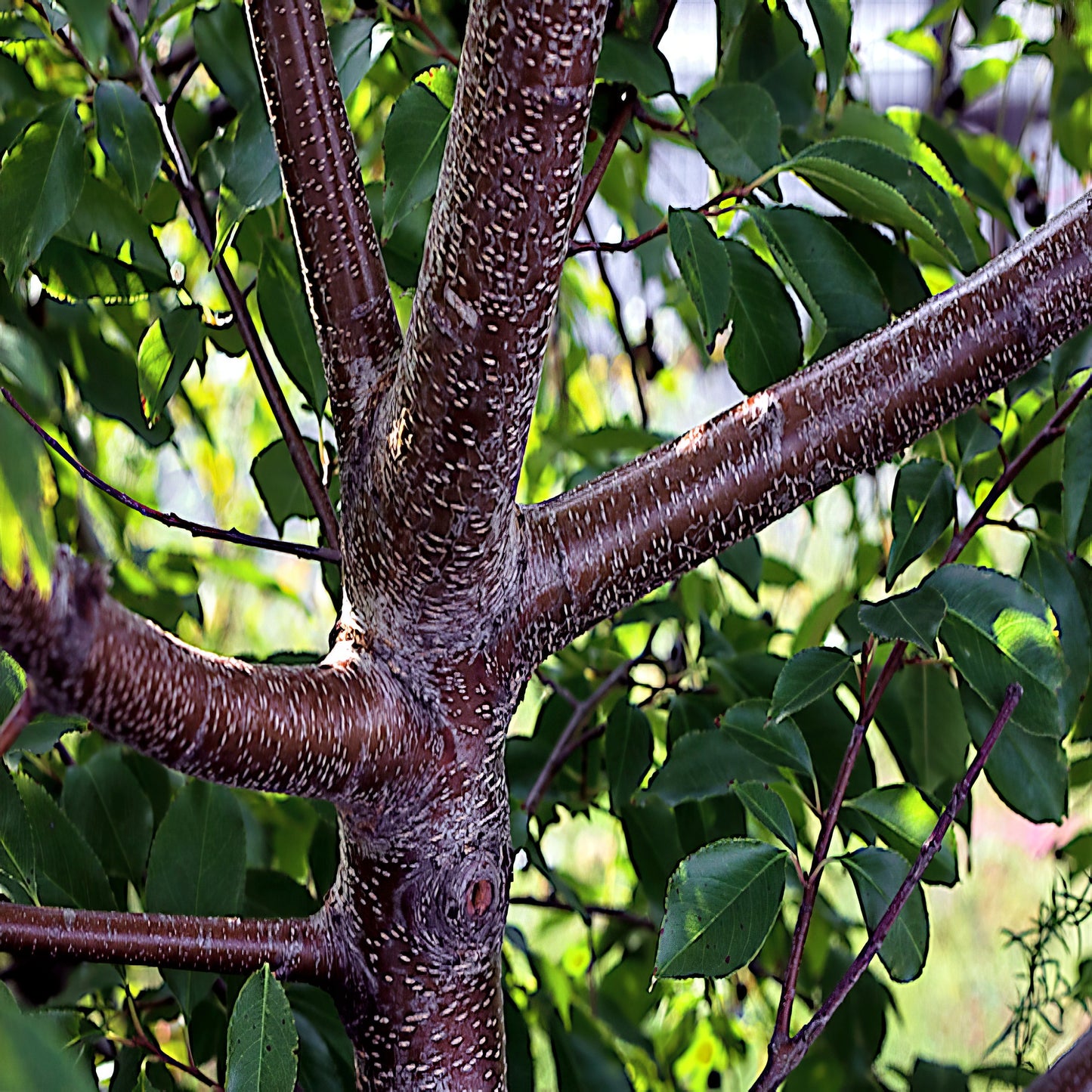
This medium to large deciduous tree typically grows 50–80 feet tall, developing a strong central trunk and a broad canopy over time. Its bark is smooth and reddish-brown when young, gradually becoming dark gray to nearly black and deeply fissured with age, creating strong visual interest in mature specimens.
In spring, Black Cherry produces long clusters of small white five-petaled flowers, which are highly attractive to pollinators. These blooms give way to small reddish-black cherry-like drupes, which are an important food source for birds and wildlife.
The leaves are shiny, finely toothed, and lance-shaped, turning shades of yellow to deep red in fall, adding seasonal color to the landscape.
🌱 Growing & Care Information
Light: Full sun to partial shade
Soil: Adaptable; prefers moist, fertile, well-drained soils
Water: Moderate; prefers consistent moisture when young
Growth: Fast-growing deciduous hardwood tree
Climate: Highly adaptable across temperate regions
Black Cherry develops a deep taproot early, making it drought tolerant once established but more difficult to transplant at larger sizes.
🌿 Why Grow Black Cherry?
• Native wildlife and pollinator-supporting tree
• Produces ornamental flowers and fruit for birds
• Valuable hardwood used in fine furniture and woodworking
• Attractive fall color display
• Fast-growing and highly adaptable forest tree
USDA Hardiness Zones: 3–9
Black Cherry Germination:
1) Soak seeds for 12 hours in warm water.
2) Cold stratify by placing seeds in a zip lock bag filled with moist peat moss or vermiculite. Place in the fridge for 120 days. Periodically check to ensure they do not dry out. Keep moist, but never wet. This will break the seeds dormancy.
3) Plant seeds in a moist & well draining seed starting mix.
4) Use a heated propagator to keep the temperature at 75 degrees F.
5) Expect germination within 2 weeks.
Germinación de la cereza negra:
1) Remoje las semillas durante 12 horas en agua tibia.
2) Estratifíquelas en frío colocando las semillas en una bolsa con cierre hermético llena de turba húmeda o vermiculita. Colóquelas en el refrigerador durante 120 días. Revíselas periódicamente para asegurarse de que no se sequen. Manténgalas húmedas, pero nunca mojadas. Esto romperá la latencia de las semillas.
3) Plante las semillas en una mezcla para semillas húmeda y con buen drenaje.
4) Use un propagador calentado para mantener la temperatura a 75 grados F.
5) Espere la germinación dentro de las 2 semanas.
Share