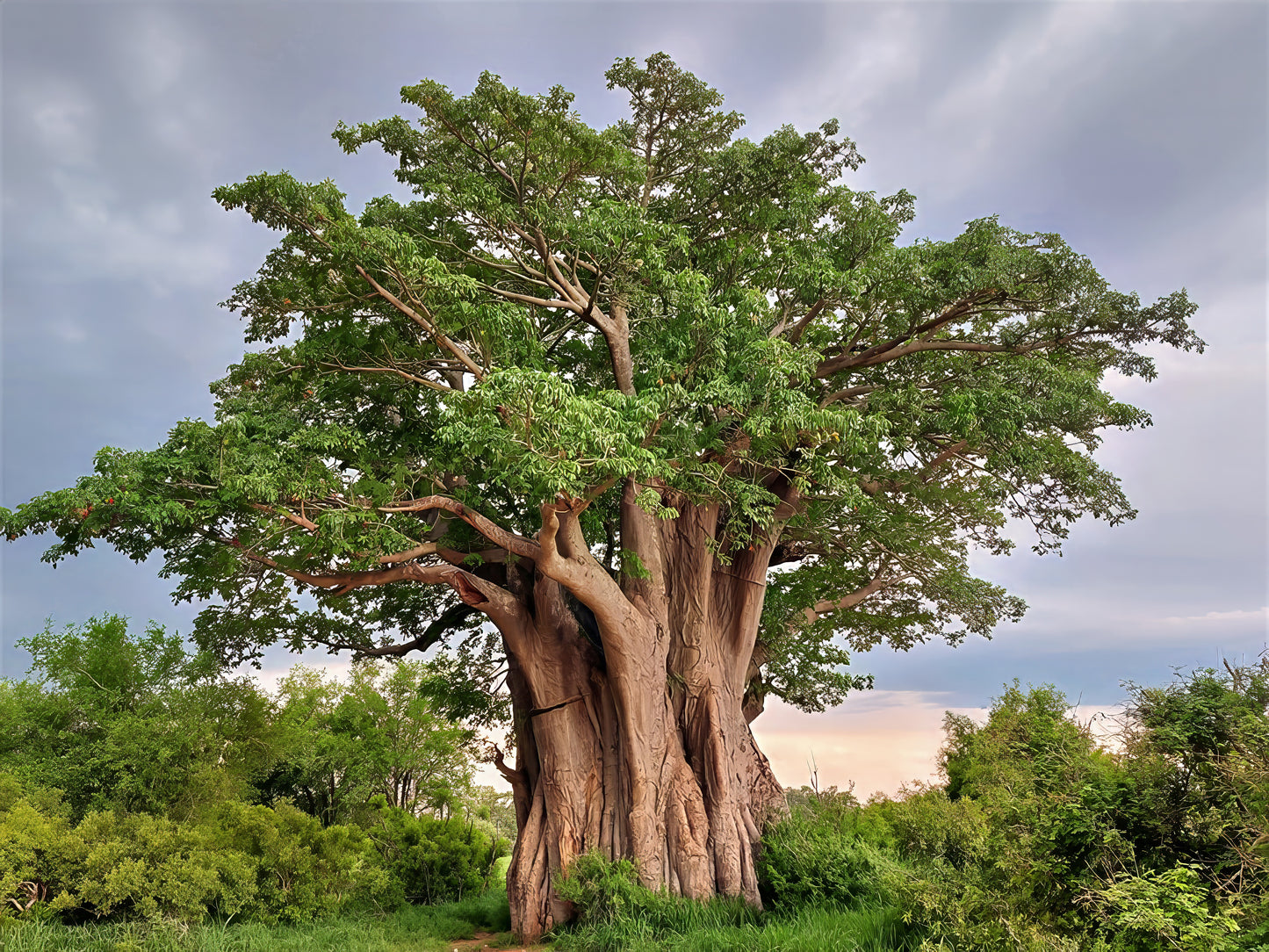
Baobab Seeds (Adansonia digitata) ‘Tree of Life’ Rare Monkey Bread Bonsai Tropical Tree
Baobab Seeds (Adansonia digitata) ‘Tree of Life’ Rare Monkey Bread Bonsai Tropical Tree
Couldn't load pickup availability
EXOTIC AFRICAN BAOBAB TREE SEEDS (Adansonia digitata)
The Baobab Tree (Adansonia digitata), also known as the “Tree of Life,” is one of the most iconic and unusual trees on Earth. Native to the arid regions of Africa, Madagascar, Australia, Arabia, and India, this prehistoric-looking species is famous for its massive trunk, extreme longevity, and ability to thrive in harsh desert environments.
Often called the world’s largest succulent, the Baobab can store enormous amounts of water in its thick, bottle-shaped trunk, allowing it to survive long periods of drought. In ideal conditions, these trees can reach heights of 80–100 feet and live for thousands of years.
This species is highly adaptable and can also be grown as a container plant or bonsai, making it especially popular among collectors seeking rare and exotic specimen trees. It prefers warm climates and does not tolerate frost, but can be easily grown indoors in cooler regions.
In spring, Baobab produces large white flowers approximately 4 inches in diameter, featuring prominent clusters of stamens. These are followed by elongated, club-shaped fruits known as “monkey bread,” which hang from the branches throughout the growing season.
The fruit contains a powdery, tart pulp and large black seeds. It is naturally rich in nutrients and widely considered a superfruit, with high levels of vitamin C, calcium, potassium, and iron. The pulp is often consumed as a drink or powder, while young leaves can be used similarly to spinach.
🌱 Growing & Care Information
Light: Full sun required
Soil: Well-drained, sandy or rocky soil
Water: Low; highly drought tolerant once established
Growth: Extremely slow-growing succulent tree
Climate: Tropical to subtropical; frost-sensitive
Baobab thrives in dry environments and is perfectly suited for bonsai cultivation, container growing, and rare plant collections.
🌿 Why Grow Baobab?
• One of the most ancient and unique trees on Earth
• Can live for thousands of years
• Produces nutrient-rich edible superfruit
• Excellent for bonsai and container growing
• Extremely drought tolerant and low maintenance
USDA Hardiness Zones: 10–12 (can be grown indoors in cooler climates)
Baobab Germination:
1) Before sowing, the Baobab seeds needs soaking at room temperature. For this, soak the seeds for one day in warm water. After that, scarify the baobab seed's hard shell with a file, to expose their inner lighter colored layer before anything else.
2) Dry seeds indoors for a day before planting. The germination rate of baobab seeds is low, so sow 3 times more seeds than required.
3) Sow Baobab seeds 1 to 2 inch deep and keep the soil temperature above at least 78 degrees F. Warmer is even better. It is important to keep soil evenly moist, but not kept wet. 4)Once the roots are formed, baobab can be planted into individual pots or on the grounds. The pot you use should have a minimum diameter of 3" inches.
5) With Any Exotic or Tropical Seed, The germination of Baobab seeds is sporadic, with their germination taking anywhere from a week to several months, so the cultivation of Baobab from seed requires some patience. Don't let others lead you to believe germination is just easy without letting you know you'll need patience. You could be lucky and have one sprout in a few weeks, but most of them will take longer so do not disregard them. They are Definitely Worth waiting on.
Germinación del baobab:
1) Antes de sembrar, las semillas de baobab deben remojarse a temperatura ambiente. Para ello, remoje las semillas durante un día en agua tibia. Después, escarifique la cáscara dura de la semilla de baobab con una lima, para exponer su capa interior de color más claro antes de cualquier otra cosa.
2) Seque las semillas en el interior durante un día antes de plantarlas. La tasa de germinación de las semillas de baobab es baja, por lo que debe sembrar 3 veces más semillas de las necesarias.
3) Siembre las semillas de baobab a una profundidad de 1 a 2 pulgadas y mantenga la temperatura del suelo por encima de al menos 78 grados F. Cuanto más caliente, mejor. Es importante mantener el suelo uniformemente húmedo, pero no mojado.
4) Una vez que se formen las raíces, el baobab se puede plantar en macetas individuales o en el suelo. La maceta que utilices debe tener un diámetro mínimo de 3 pulgadas.
5) Con cualquier semilla exótica o tropical, la germinación de las semillas de Baobab es esporádica, y su germinación puede tardar entre una semana y varios meses, por lo que el cultivo de Baobab a partir de semillas requiere algo de paciencia. No dejes que otros te hagan creer que la germinación es fácil sin avisarte que necesitarás paciencia. Podrías tener suerte y tener un brote en unas pocas semanas, pero la mayoría de ellos tardarán más, así que no los desestimes. Definitivamente vale la pena esperar
Share