Stratified Paw Paw Fruit Tree Seeds (Asimina triloba) – Hardy Native Banana Tree | Zone 5–9
Stratified Paw Paw Fruit Tree Seeds (Asimina triloba) – Hardy Native Banana Tree | Zone 5–9
Couldn't load pickup availability
Paw Paw Fruit Tree Seeds (Asimina triloba)
The Paw Paw (Asimina triloba), commonly known as the Indian Banana, is a rare and highly prized native North American fruit tree known for producing the largest edible fruit native to the United States. Despite its tropical-looking fruit and banana-like flavor, the pawpaw is extremely cold hardy and thrives in temperate climates.
This unique fruit tree is native to 26 states east of the Mississippi River and parts of southern Canada. Pawpaw fruit has a creamy, custard-like texture with flavors often compared to banana, mango, and melon. Individual fruits typically weigh 5–16 ounces, making them exceptionally large for a native tree fruit.
These seeds are cold stratified and ready to plant, meaning the dormancy requirement has already been met for proper germination when planted under suitable conditions.
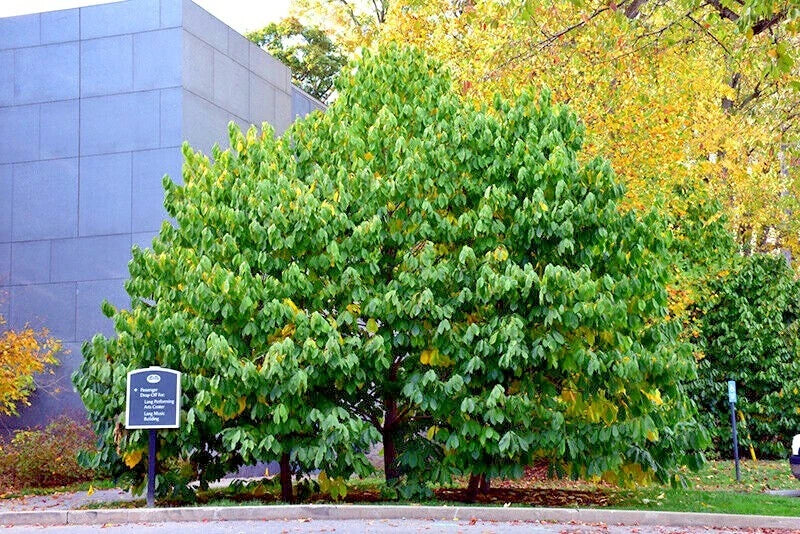
Pawpaw trees are slow to establish but reward patience with heavy fruit production once mature. Trees generally reach 12–25 feet tall with a spread of 8–15 feet, making them ideal for home orchards, forest gardens, and native landscapes.
🌱 Growing & Care Information
Light: Full sun to partial shade (young trees prefer some shade)
Soil: Deep, fertile, moist but well-drained soil
Water: Moderate; keep soil evenly moist during establishment
Spacing: 8–15 feet apart
Pollination: Best fruit set with two or more trees
Cold Tolerance: Extremely cold hardy
Pawpaw trees are relatively pest-free, tolerate partial shade, and are well suited for interplanting with other trees. Once established, they are long-lived and dependable producers.
🌳 Why Grow Paw Paw Trees?
• Largest native fruit in North America
• Cold-hardy fruit tree (Zones 5–8)
• Rare and highly sought-after species
• Tropical-flavored fruit on a temperate tree
• Native, low-maintenance, and pest resistant
USDA Hardiness Zones: 5–8
Paw Paw Germination:
Stratified & Ready to Plant
1) Soak seeds in warm water for no more than 12 hours.
2) Use a heated propagator to keep the soil at a constant 85 degrees F.
3) Plant the seeds with the flat sides down at appx. 1" inch deep in seed starting mix.
4) Keep the soil PH between 5.0 to 7.0 & be sure to keep it moist, not wet as that can rot the seeds. Keep them in the shade, with little to no exposure to light.
6) As long as the seeds have been kept moist at all times, and kept at a temperature of 80-85 degrees F, expect germination in 2-3 weeks, but the shoots will emerge in appx. 2 months.
Pawpaw seeds are known as "hypogeal", meaning they develop roots before they develop leaves. This means you won’t see much above ground activity for quite sometime after germination begins. (See Picture 6 to see tap roots starting.) It may be well into summer before you see the leaves start to unfold which is normal in nature for Pawpaw seedlings. Do not place seedling in direct light until they are well established. Filtered light is optimal for seedlings. Wait until they are well established before exposing them to direct sunlight.
"If you plan to store the seeds instead of planting immediately, be sure to keep them slightly moist to keep them viable"
Germinación de la papaya:
Estratificadas y listas para plantar
1) Remoje las semillas en agua tibia durante no más de 12 horas.
2) Use un propagador con calefacción para mantener la tierra a una temperatura constante de 85 grados Fahrenheit (29 grados Celsius).
3) Plante las semillas con el lado plano hacia abajo, a aproximadamente 2,5 cm de profundidad, en una mezcla para siembra.
4) Mantenga el pH de la tierra entre 5.0 y 7.0 y asegúrese de mantenerla húmeda, no empapada, ya que esto puede pudrir las semillas. Manténgalas a la sombra, con poca o ninguna exposición a la luz.
6) Siempre que las semillas se hayan mantenido húmedas en todo momento y a una temperatura de 80-85 grados Fahrenheit (27-29 grados Celsius), la germinación se producirá en 2-3 semanas, pero los brotes emergerán en aproximadamente 2 meses.
Las semillas de papaya se conocen como "hipogeas", lo que significa que desarrollan raíces antes de desarrollar hojas. Esto significa que no verá mucha actividad sobre el suelo durante bastante tiempo después de que comience la germinación. (Vea la imagen 6 para ver el inicio del desarrollo de las raíces principales). Es posible que sea bien entrado el verano antes de que vea que las hojas comienzan a desplegarse, lo cual es normal en la naturaleza para las plántulas de papaya. No coloque las plántulas a la luz directa hasta que estén bien establecidas. La luz filtrada es óptima para las plántulas. Espere hasta que estén bien establecidas antes de exponerlas a la luz solar directa.
Share