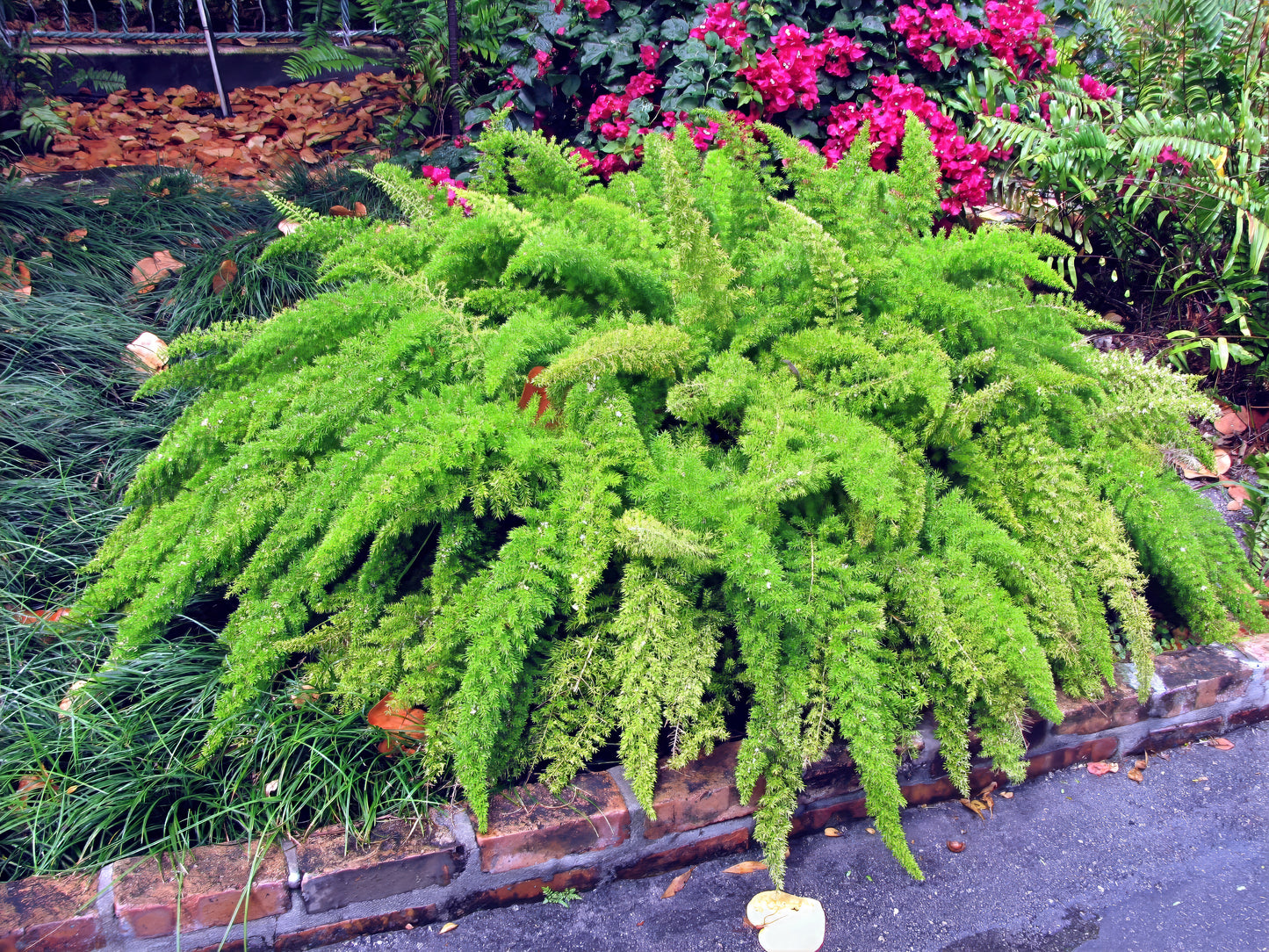
Asparagus Foxtail Fern Seeds (Asparagus densiflorus ‘Meyersii’) Rare Tropical Houseplant
Asparagus Foxtail Fern Seeds (Asparagus densiflorus ‘Meyersii’) Rare Tropical Houseplant
Couldn't load pickup availability
Asparagus Foxtail Fern Seeds (Asparagus densiflorus ‘Meyeri’)
The Asparagus densiflorus ‘Meyeri’, commonly known as Foxtail Fern or Asparagus Foxtail Fern, is a unique evergreen ornamental plant prized for its dense, upright plumes of bright green, needle-like foliage that resemble soft fox tails. Despite its common name, this plant is not a true fern but a member of the asparagus family grown for its striking decorative appearance.
Native to South Africa, Foxtail Fern is widely grown as both an indoor houseplant and outdoor landscape accent in warm climates. It produces soft, plume-like stems that create a lush, textured look ideal for containers, borders, hanging baskets, and tropical-style gardens.
In summer and fall, mature plants may produce small fragrant white flowers followed by bright red berries, adding seasonal interest to its already distinctive foliage. Its drought tolerance and low-maintenance nature make it a popular choice for modern landscaping and indoor plant collections.
This ornamental plant typically grows 2–3 feet tall and wide, forming dense mounds of upright foliage. In colder climates, it is commonly grown indoors or treated as a seasonal container plant, while in warmer regions it can remain outdoors year-round.
🌱 Growing & Care Information
Light: Bright light to partial shade (morning sun preferred)
Soil: Well-draining soil, adaptable to many types
Water: Moderate; allow topsoil to dry slightly between waterings
Growth: Moderate-growing evergreen perennial
Climate: Warm climates or indoor cultivation in colder regions
Foxtail Fern stores water in underground tubers, making it somewhat drought tolerant once established, but it performs best with regular watering and good drainage.
🌿 Why Grow Foxtail Fern?
• Unique fox-tail shaped ornamental foliage
• Excellent indoor and outdoor container plant
• Low maintenance and drought tolerant once established
• Bright evergreen texture for landscaping contrast
• Produces seasonal flowers and red berries
• Ideal for modern tropical-style gardens
• Great hanging basket and patio accent plant
• Hardy in warm climates, adaptable indoors
USDA Hardiness Zones: 9–11 (or grown indoors in colder climates)
Foxtail Germination:
1) Nick the Hard Coating of the Seed, (fingernail clippers work great to clip a few shallow places in the Coating, or Rub with Sandpaper to Help Make the Hard Seeds Permeable.
2) Soak the Seeds Overnight in Luke Warm Water.
3) Add Moist Seed-Starting Mix to a Seed-Raising Tray up to 3/4 Inch from the Top. Tamp Down the Soil so it's Firm in the Container. Spread the Seeds about 1" Inch Apart Over the Soil Surface. Sprinkle a 1/2-Inch Layer of Seed-Starting Mix Over the Seeds and Lightly Tamp it Down with your Hand to Level the Surface.
4) Moisten the Top Layer of Soil with a Water-Filled Spray Bottle. Cover the Seed-Raising Tray with a Piece of Plastic Wrap to Provide a Consistent Humidity Level.
5) For Optimal Germination Rates & Speed, Use a heated propagator to keep the soil at least 70 Degrees Fahrenheit or more so you will achieve Optimal Germination Results. As Needed, Mist the Soil with the Spray Bottle to Keep it Evenly Moist during the Germination Period. Expect the Seeds to Germinate within 4-6 weeks and with some taking well over 1 or 2 months. Just check the seeds periodically as they may need to be removed and rinsed in a copper based fungicide and replanted in fresh soil if mold or fungus is present. Never too Wet, & Never too Dry. At this point, it may help to keep your thoughts on the prize: a new foxtail fern, complete with berries that you’ll be able to propagate again. While many other seeds sprout in a matter of days, as with any Exotic Plant or Tree seeds, these seeds could keep you waiting a month or longer. Much like most tree seeds we sell that have to be put through cold stratification anywhere from 30-120 days before planting, these exotics will require patience and care as well.
"Please Contact us First if you need Anything"
Germinación de la cola de zorro:
1) Quite la capa dura de la semilla (un cortaúñas funciona muy bien para cortar algunos lugares poco profundos en la capa o frote con papel de lija para ayudar a que las semillas duras sean permeables).
2) Deje las semillas en remojo durante la noche en agua tibia.
3) Agregue la mezcla húmeda para iniciar la siembra a una bandeja para sembrar semillas hasta 3/4 de pulgada desde la parte superior. Apisone la tierra para que esté firme en el recipiente. Distribuye las semillas a una distancia de aproximadamente 1 pulgada sobre la superficie del suelo. Espolvorea una capa de 1/2 pulgada de mezcla para iniciar las semillas sobre las semillas y apisónala ligeramente con la mano para nivelar la superficie.
4) Humedece la capa superior del suelo con una botella rociadora llena de agua. Cubre la bandeja de cultivo de semillas con un trozo de envoltura de plástico para proporcionar un nivel de humedad constante.
5) Para obtener tasas y velocidades de germinación óptimas, usa un propagador calentado para mantener el suelo al menos a 70 grados Fahrenheit o más para lograr resultados de germinación óptimos. Según sea necesario, rocía el suelo con la botella rociadora para mantenerlo uniformemente húmedo durante el período de germinación. Espera que las semillas germinen en 4 a 6 semanas y algunas demoran más de 1 o 2 meses. Solo revisa las semillas periódicamente, ya que es posible que deban retirarse y enjuagarse con un fungicida a base de cobre y replantarse en tierra fresca si hay moho u hongos. Nunca demasiado Húmedo y nunca demasiado seco. En este punto, puede resultar útil pensar en el premio: un nuevo helecho cola de zorro, con bayas que podrá volver a propagar. Si bien muchas otras semillas brotan en cuestión de días, como ocurre con cualquier semilla de planta o árbol exótico, estas semillas pueden hacer que espere un mes o más. Al igual que la mayoría de las semillas de árboles que vendemos, que deben someterse a una estratificación en frío entre 30 y 120 días antes de plantarlas, estas plantas exóticas también requerirán paciencia y cuidado.
"Comuníquese con nosotros primero si necesita algo"
Share