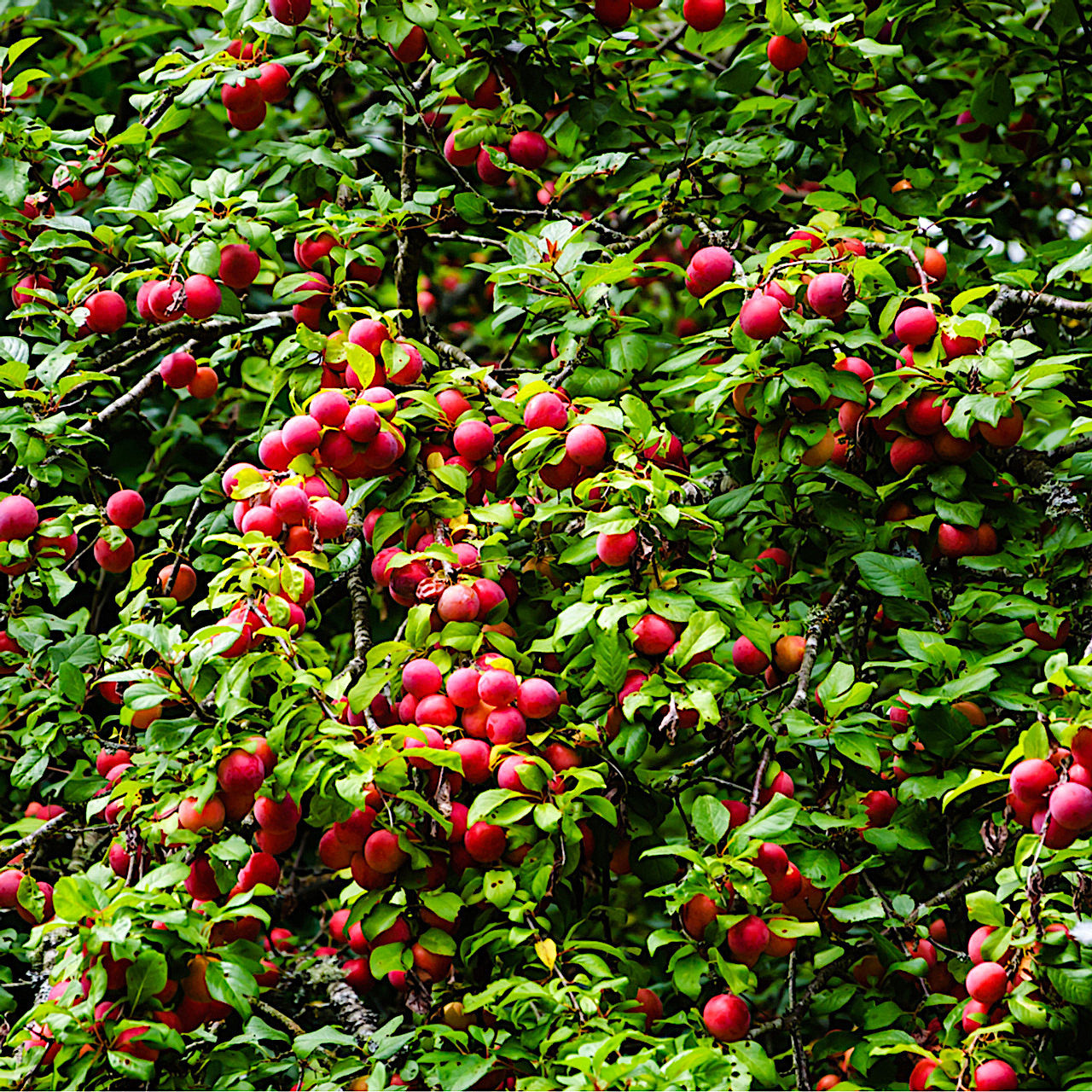
American Plum Tree Seeds (Prunus americana) – Fast-Growing Hardy Native Fruit Tree Zone 3+
American Plum Tree Seeds (Prunus americana) – Fast-Growing Hardy Native Fruit Tree Zone 3+
Couldn't load pickup availability
AMERICAN PLUM TREE SEEDS (Prunus americana)
The American Plum (Prunus americana) is a hardy, fast-growing native fruit tree known for its beautiful spring blooms and edible fruit production. Commonly found along fencerows, open fields, woodlands, and roadsides, this adaptable species is an excellent choice for naturalized plantings, wildlife habitats, and home landscapes.
This small to medium-sized deciduous tree or large shrub typically grows 15–25 feet tall and wide, often forming dense colonies through root suckers. In early spring, it produces an abundance of fragrant white flowers that cover the branches before the leaves emerge, creating a stunning ornamental display.
These blossoms are followed by small, round plum fruits that ripen from yellow to red, attracting birds and wildlife. The fruit is edible and can be used for jellies, preserves, and fresh eating when fully ripe.
🌱 Growing & Care Information
Light: Full sun to partial shade
Soil: Highly adaptable; tolerates sandy, loamy, and poorly drained soils
Water: Moderate; tolerant of varying moisture conditions
Growth: Fast-growing deciduous tree or large shrub
Climate: Extremely cold hardy and adaptable
American Plum is known for its resilience and ability to thrive in a wide range of environments, making it ideal for windbreaks, hedgerows, erosion control, and wildlife plantings.
🌿 Why Grow American Plum?
• Produces beautiful white spring flowers
• Edible fruit for wildlife and home use
• Extremely cold hardy native species
• Fast-growing and easy to establish
• Ideal for naturalized and low-maintenance landscapes
USDA Hardiness Zones: 3–8
Plum Germination:
1) Soak seeds for 24 hours in warm water.
2) Cold stratify seeds for 120 days. (Place seeds inside of a zip lock bag filled with moist vermiculite or peat moss. Periodically check to ensure they don't dry out. Mist them with a spray bottle when necessary, but never wet, just moist.)
3) Use a well mixed and well draining seed starting mix and plant seeds 1/2 inch deep.
4) Use a heated propagator mat to keep soil temperature around 85 degrees F during the day. Turn off heated propagator at night letting temps drop to appx. 68 degrees. Giving alternating temperatures mimics their natural conditions and will greatly improve germination time.
5) Use a grow lamp to provide bright light. Keep moist and expect germination to occur within 2-3 weeks.
Germinación de ciruelas:
1) Remoje las semillas durante 24 horas en agua tibia.
2) Estratifique las semillas en frío durante 120 días. (Coloque las semillas dentro de una bolsa con cierre hermético llena de vermiculita húmeda o turba. Revíselas periódicamente para asegurarse de que no se sequen. Rocíelas con un atomizador cuando sea necesario, pero nunca las moje, solo humedezca.)
3) Use una mezcla para semillas bien mezclada y con buen drenaje y plante las semillas a 1/2 pulgada de profundidad.
4) Use una estera de propagación calentada para mantener la temperatura del suelo alrededor de 85 grados F durante el día. Apague el propagador calentado por la noche y deje que las temperaturas bajen a aproximadamente 68 grados. Dar temperaturas alternas imita sus condiciones naturales y mejorará en gran medida el tiempo de germinación.
5) Use una lámpara de cultivo para proporcionar luz brillante. Manténgala húmeda y espere que la germinación ocurra dentro de 2 a 3 semanas.
Share