American Beech Tree Seeds (Fagus grandifolia) Hardy Native Forest Tree | Shade & Timber Ornamental
American Beech Tree Seeds (Fagus grandifolia) Hardy Native Forest Tree | Shade & Timber Ornamental
Couldn't load pickup availability
American Beech Tree Seeds (Fagus grandifolia)
The Fagus grandifolia, commonly known as American Beech, is a long-lived deciduous hardwood tree native to eastern North America. It is highly valued for its smooth gray bark, dense canopy, and strong ecological importance in native forest ecosystems.
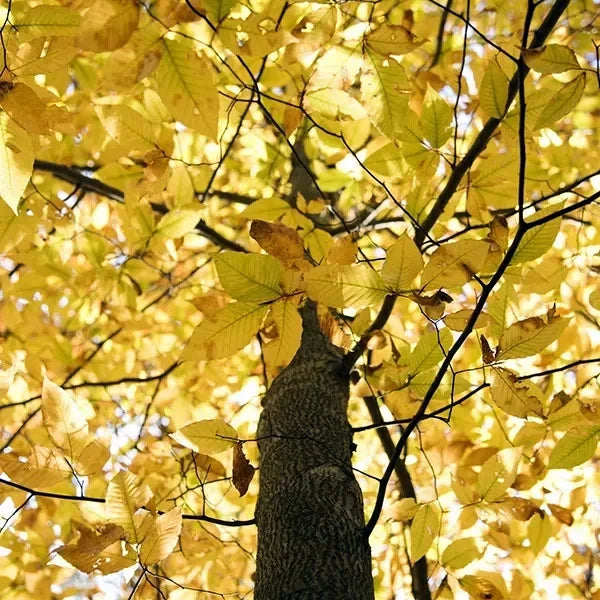
This majestic forest tree typically grows 50–70 feet tall, forming a straight trunk with a broad, rounded crown at maturity. Its bark is famously smooth and silver-gray, often marked with carvable textures that remain visible for many years. The leaves are oval to elliptical with finely serrated edges, emerging glossy green in spring and summer before turning rich golden yellow to copper-orange in the fall.
American Beech produces small, triangular beechnuts enclosed in spiky husks. These nuts are an important food source for wildlife including birds, squirrels, deer, and other forest animals, making it a valuable ecological species for naturalized landscapes and reforestation projects.
This species thrives in rich, moist, well-drained soils and is commonly found in mixed hardwood forests, often growing in shaded or partially shaded environments. Once established, it is long-lived, resilient, and capable of living for centuries under ideal conditions.
🌱 Growing & Care Information
Light: Full shade to partial sun
Soil: Moist, fertile, well-draining soil
Water: Moderate; prefers consistent moisture
Growth: Slow-growing deciduous hardwood tree
Climate: Temperate forests and woodland regions
American Beech is best suited for large landscapes, forest restoration, and natural woodland gardens where it can develop its full canopy and long-term structure.
🌿 Why Grow American Beech?
• Smooth iconic gray bark
• Long-lived native forest tree
• Produces wildlife food (beechnuts)
• Excellent shade and canopy tree
• High-quality hardwood timber species
• Beautiful golden fall foliage
• Important ecological woodland species
• Ideal for reforestation and natural landscapes
USDA Hardiness Zones: 3–9
BEECH TREE GERMINATION:
1) Beech seeds require cold stratification to break dormancy. Place the seeds in a plastic bag with moist sand, peat, or vermiculite. Keep the mixture slightly damp, then refrigerate at 34-41°F (1-5°C) for 30-60 days.
2) After stratification, plant the seeds in a well-draining, loamy soil. Space seeds 1-2 inches apart, planting them about 1 inch deep.
3) Keep the soil consistently moist but not waterlogged. Use a heated propagator mat to keep an ideal temperature between 70-80°F (21-27°C). Germination can take 4-6 weeks.
4) Once the seeds germinate, provide bright, indirect light. Transplant seedlings into larger pots or into the ground once they have developed strong roots and at least a few sets of leaves.
GERMINACIÓN DE HAYAS:
1) Las semillas de haya requieren estratificación en frío para romper la latencia. Coloque las semillas en una bolsa de plástico con arena, turba o vermiculita húmedas. Mantenga la mezcla ligeramente húmeda y refrigérela a 1-5 °C (34-41 °F) durante 30-60 días.
2) Después de la estratificación, siembre las semillas en un suelo franco y con buen drenaje. Deje una separación de 2,5-5 cm (1-2 pulgadas) entre semillas y siémbrelas a unos 2,5 cm (1 pulgada) de profundidad.
3) Mantenga el suelo constantemente húmedo, pero no encharcado. Utilice una manta térmica para propagación para mantener una temperatura ideal entre 21-27 °C (70-80 °F). La germinación puede tardar de 4 a 6 semanas.
4) Una vez que las semillas germinen, proporcione luz brillante indirecta. Trasplante las plántulas a macetas más grandes o al suelo una vez que hayan desarrollado raíces fuertes y al menos algunos pares de hojas
Share