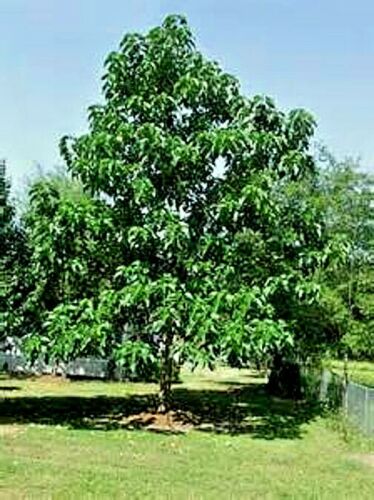
Royal Empress (Paulownia tomentosa) Seeds "FASTEST GROWING TREE in the WORLD"
Royal Empress (Paulownia tomentosa) Seeds "FASTEST GROWING TREE in the WORLD"
Couldn't load pickup availability
Royal Empress Tree Seeds (Paulownia tomentosa) Fast Growing Shade Tree
"Due to state invasive species regulations, we are unable to ship Paulownia tomentosa seeds to Maine, Connecticut, Maryland, or Wisconsin. Orders placed from these states will be cancelled and refunded."
The Paulownia tomentosa, commonly known as the Royal Empress Tree or Princess Tree, is a fast-growing deciduous tree native to China and widely grown across the United States for its rapid growth, ornamental beauty, and large shade canopy.
Known as one of the fastest-growing shade trees in the world, Royal Empress Tree can grow up to 10–15 feet in its first year under ideal conditions. It develops into a tall, spreading shade tree reaching 25–50 feet at maturity, making it an excellent choice for quick landscape impact.
In spring, the tree produces large clusters of fragrant, bell-shaped lavender-purple flowers that bloom before the leaves emerge. These blossoms are highly ornamental and attract pollinators while filling the air with a light floral fragrance. Following flowering, the tree develops enormous heart-shaped leaves that can reach up to 2–3 feet wide, providing dense summer shade and excellent cooling benefits.
The Royal Empress Tree is highly adaptable and thrives in a wide range of soils, though it performs best in well-drained locations. It is drought tolerant once established, fast recovering, and known for its resilience and ease of growth.
In winter, the tree develops fuzzy, protective buds along its branches, adding unique seasonal interest even after leaf drop. Its rapid growth and broad canopy make it popular for shade production, erosion control, and ornamental landscaping.
Light: Full sun to partial shade
Soil: Adaptable; prefers well-drained soil
Water: Moderate; drought tolerant once established
Growth: Extremely fast-growing deciduous shade tree
Climate: Temperate to warm regions
Why Grow Royal Empress Tree?
• One of the fastest-growing shade trees in the world
• Large fragrant lavender spring flowers
• Massive tropical-looking leaves
• Excellent shade and cooling tree
• Drought tolerant and hardy once established
• Great for landscape impact and erosion control
• Adaptable to many soil types
• Ornamental and highly decorative tree
USDA Hardiness Zones: 5–11
Paulownia Germination Instructions:
Step 1
Mix equal parts of the seed with "potato flakes". The seeds are very small and look similar to the flakes. Adding them to the flakes dilutes them for easier sowing. The potato will also help keep them moist once you have planted them.
Step 2
Fill a shallow tray with potting soil to a depth of 1 inch and dampen. This tray must have a clear covering so that light can get through. Use a clear polyethylene film stretched over the top if you do not have a fitted cover.
Step 3
Sprinkle the diluted seeds evenly over the surface of the potato flakes. Do NOT bury the seeds since they need light to germinate.
Step 4
Water the seeds lightly. The potato flakes will absorb the moisture and keep the seeds damp until they sprout. Cover the container with the lid or film and set in a warm place with plenty of sunshine.
Step 5
Remove the lid as soon as you see green sprouts appearing. Mist the seedlings lightly and thin them out as they grow larger to provide enough space. Transplant them to a larger container when they are just about an inch high.
"Please Contact us First if you Need Anything"
Instrucciones para la germinación de paulownia:
Paso 1
Mezcle partes iguales de la semilla con "hojuelas de papa". Las semillas son muy pequeñas y se parecen a las hojuelas. Agregarlas a las hojuelas las diluye para facilitar la siembra. La papa también ayudará a mantenerlas húmedas una vez que las haya plantado.
Paso 2
Llene una bandeja poco profunda con tierra para macetas hasta una profundidad de 1 pulgada y humedezca. Esta bandeja debe tener una cubierta transparente para que pueda pasar la luz. Use una película de polietileno transparente estirada sobre la parte superior si no tiene una cubierta ajustada.
Paso 3
Espolvoree las semillas diluidas de manera uniforme sobre la superficie de las hojuelas de papa. NO entierre las semillas ya que necesitan luz para germinar.
Paso 4
Riega las semillas ligeramente. Las hojuelas de papa absorberán la humedad y mantendrán las semillas húmedas hasta que broten. Cubre el recipiente con la tapa o la película y colócalo en un lugar cálido con mucho sol.
Paso 5
Quita la tapa tan pronto como veas que aparecen brotes verdes. Rocíe ligeramente las plántulas y aclare a medida que crezcan para proporcionar suficiente espacio. Trasplántelas a un recipiente más grande cuando tengan aproximadamente una pulgada de alto.
"Comuníquese con nosotros primero si necesita algo"
Share