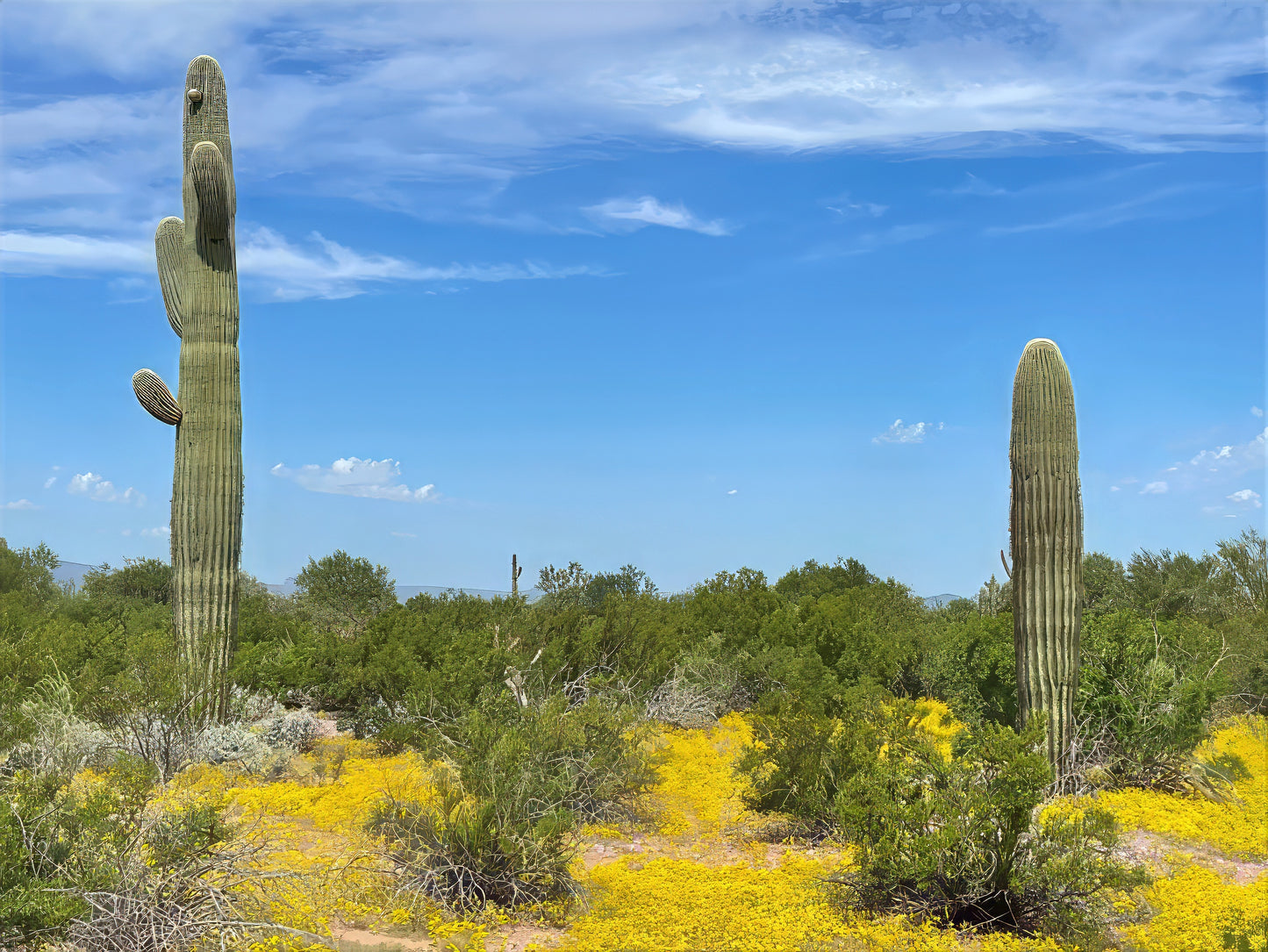
10 Saguaro Giant Cactus Seeds (Carnegiea gigantea) – Tree-Like Cacti – Hardy Zone 8 Desert Succulent
10 Saguaro Giant Cactus Seeds (Carnegiea gigantea) – Tree-Like Cacti – Hardy Zone 8 Desert Succulent
Couldn't load pickup availability
10 Saguaro Giant Cactus Seeds (Carnegiea gigantea)
The Saguaro Giant Cactus (Carnegiea gigantea) is one of the most majestic desert plants in the world, native to the Sonoran Desert. Known for its towering height and iconic “arms,” this slow-growing cactus is a symbol of resilience and longevity. Mature plants can reach 40–60 feet tall, with some individuals exceeding 75 feet, and live for over 150 years. Its ability to store up to 200 gallons of water allows it to survive the harshest desert conditions.
In late spring, the saguaro produces large white flowers, attracting pollinators such as bats, bees, and birds. These flowers are followed by red, fleshy fruits that provide food for wildlife and can also be harvested for syrup, jams, and other treats.
Young saguaros start small but develop a thick, ribbed, green trunk covered in protective spines. Its famous “arms” typically appear after 75–100 years, contributing to the cactus’s iconic silhouette. Some plants may never grow arms depending on environmental conditions.
🌱 Growing & Care Information
Light: Full sun
Soil: Well-draining desert or sandy soil
Water: Low; drought-tolerant once established
Temperature: Prefers hot, dry climates; hardy to Zone 8
Spacing: Allow room for growth; young seedlings require protection
Patience: Extremely slow-growing; 10 years to reach ~1 foot
The saguaro’s shallow but wide root system, waxy skin, and columnar structure make it extremely resilient, capable of withstanding desert winds, heat, and extreme temperature fluctuations. This makes it a stunning centerpiece for desert landscapes, xeriscapes, or container growing in warmer zones.
🌵 Why Grow Saguaro Giant Cactus?
• Iconic tree-like desert cactus
• Slow-growing, extremely long-lived (150+ years)
• Produces stunning white flowers and edible red fruits
• Hardy and drought-tolerant once established
• Symbol of the American Southwest and Sonoran Desert
USDA Hardiness Zones: 8–11
Saguaro Germination:
1. Choose a shallow, wide, sterile container with drainage; avoid deep pots to prevent rot.
2. Fill with cactus seed-starting mix or 1/3 potting soil, 1/3 perlite, 1/3 sand. Optionally bake soil at 180°F for 30 mins to sterilize. Lightly mist soil until damp, not soggy.
3. Scatter tiny seeds evenly on soil surface; do NOT cover since they need light. Press gently for contact.
4. Cover container with clear plastic (lid or wrap) to keep humidity high; place in warm spot (75-85°F). Use a low heat pad if needed.
5. Mist soil every few days; avoid direct watering on seeds to prevent disturbance. Bottom watering by placing tray in shallow water for a few minutes works well.
6. Provide bright, indirect light or 12-16 hours/day of grow lights; avoid direct sun to prevent overheating.
7. Germination takes 2-6 weeks or longer; maintain moist soil and warm, humid environment until tiny green seedlings appear.
"Please Contact us First if you Need Anything"
Germinación del Saguaro:
1) Elija un recipiente poco profundo, amplio, estéril y con drenaje; evite las macetas profundas para evitar la pudrición. Llénelo con mezcla para sembrar cactus o con 1/3 de tierra para macetas, 1/3 de perlita y 1/3 de arena. Opcionalmente, hornee la tierra a 82 °C durante 30 minutos para esterilizarla. Rocíe ligeramente la tierra hasta que esté húmeda, no empapada.
2) Distribuya las semillas diminutas uniformemente sobre la superficie de la tierra; NO las cubra, ya que necesitan luz. Presione suavemente para que entren en contacto. Cubra el recipiente con plástico transparente (tapa o film) para mantener la humedad alta; colóquelo en un lugar cálido (24-29 °C). Use una almohadilla térmica suave si es necesario.
3) Rocíe la tierra cada pocos días; evite regar directamente sobre las semillas para evitar que se alteren. El riego por la parte inferior, colocando la bandeja en agua poco profunda durante unos minutos, funciona bien.
4) Proporcione luz brillante e indirecta o 12-16 horas diarias de luces de cultivo; evite el sol directo para evitar el sobrecalentamiento. 5) La germinación tarda de 2 a 6 semanas o más; mantenga la tierra húmeda y un ambiente cálido y húmedo hasta que aparezcan pequeñas plántulas verdes.
"Contáctenos primero si necesita algo"
Share