Red Tiger Darjeeling Banana Seeds (Musa sikkimensis) – Rare Cold Hardy Zone 5
Red Tiger Darjeeling Banana Seeds (Musa sikkimensis) – Rare Cold Hardy Zone 5
Couldn't load pickup availability
Red Tiger “Darjeeling” Banana Tree Seeds (Musa sikkimensis)
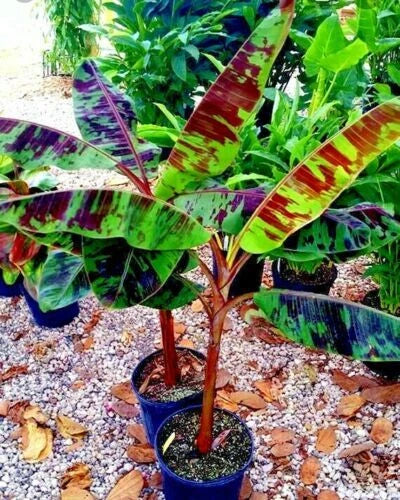
The Red Tiger Darjeeling Banana (Musa sikkimensis) is one of the most cold-hardy and visually striking banana species in cultivation, prized for its bold red tiger striping, burgundy leaf undersides, and extreme cold tolerance. Native to the foothills of the Himalayas in India and Bhutan, this species naturally grows at elevations up to 2,000 meters, where it regularly experiences snow, frost, and freezing temperatures.
Unlike common grocery-store bananas, this is a true ornamental species, grown primarily for its dramatic foliage rather than fruit production. Its thick, wind-resistant leaves feature deep green tops marked with red striping, while the undersides glow cinnamon red to burgundy, creating a stunning tropical look even in cooler climates.
This banana is hardy to USDA Zone 5 when properly mulched and is one of the most cold-tolerant bananas in the world.
🌿 Plant Characteristics
-
Mature Height: 10–12 feet
-
Growth Rate: Very fast — up to 9 feet in the first growing season
-
Trunk (Pseudostem): Thick, reddish-tinged with dark mottling
-
Leaves: Strong, wind-resistant, tiger-striped tops with red undersides
-
Habit: Clumping; produces pups from the base
-
Type: Tropical ornamental banana (not a hybrid fruit banana)
❄️ Cold Hardiness & Overwintering
-
Hardy to Zones 5-11
-
In cold climates, the plant will die back to the ground in winter and resprout vigorously in spring
-
Mulch heavily at the base for winter protection
-
In warmer zones, the plant remains dormant during winter and resumes growth in spring
🌱 Growing & Care
-
Light: Full sun to partial shade
-
Water: Regular watering during active growth
-
Soil: Well-draining, rich soil
-
Container Friendly: Excellent for patios and porches; can be moved indoors in winter
-
Indoor Growing: Can be overwintered indoors or grown year-round as a statement plant
🍌 Flowers & Fruit
-
Produces flowers and fruit after 2–3 years
-
Fruit is edible but not flavorful
-
After fruiting, the main stalk dies back, while new pups continue the plant’s growth cycle
🌴 Why Grow Musa sikkimensis?
-
One of the hardiest banana species available
-
Ideal for gardeners who want a true tropical look in cold climates
-
Rare, exotic foliage that outperforms common ornamental bananas
-
Perfect as a landscape centerpiece, container specimen, or indoor tropical accent
Musa Germination:
Sow indoors at any time of year.
Sow seeds as soon as you are able. If you are not going to sow them, store them in their packaging in a cool, dark, dry place. (Do not refrigerate)
1) Pour distilled boiling water over seeds and allow them to soak for 3 - 4 days in the warm water. Let the seeds cool with the water. Change the water & Repeat this process each day. This process is Very important, as gets rid of germination inhibitors by softening the rock hard shells of the Musa seeds.
2) Fill either large cells or trays with perlite, vermiculite & sterilized compost. Stand the trays in water until the medium is completely moist.
3) Sow the seeds an inch deep. Spray the seeds with a little copper based fungicide.
4) Use a heated propagator under the trays. Bottom heat is needed for optimal results with any Musa seed, so use a propagator if you have one or in a warm location out of direct sunlight for best results. Do not exclude light as this helps germination. Keep at a constant temperature of 68 to 77°F. Keep at 77+ during the day, while letting the temperature drop to 68-70 at night as this will daily change in temperature will increase germination rates and speed.
5) Check the seeds daily for germination. If mold or fungus starts to appear, remove the seeds and wash them in warm water. Spray them with fungicide and re-sow in a fresh medium in a sterilized pot. Keep the surface of the compost moist but not waterlogged. As with any Tropical or Exotic seed, patience is needed as germination is always erratic. Some may sprout within 2 to 3 Weeks, while most others can take from a few all the way up to Twelve Months. Do not give up too soon!
Germinación de Musa:
Siembre en interiores en cualquier época del año.
Siembre las semillas tan pronto como pueda. Si no va a sembrarlas, guárdelas en su envase en un lugar fresco, oscuro y seco (no las refrigere).
1) Vierta agua destilada hirviendo sobre las semillas y déjelas en remojo durante 3 o 4 días en el agua tibia. Deje que las semillas se enfríen con el agua. Cambie el agua y repita este proceso todos los días. Este proceso es muy importante, ya que elimina los inhibidores de germinación al ablandar las cáscaras duras como una roca de las semillas de Musa.
2) Llene celdas grandes o bandejas con perlita, vermiculita y abono esterilizado. Coloque las bandejas en agua hasta que el medio esté completamente húmedo.
3) Siembre las semillas a una pulgada de profundidad. Rocíe las semillas con un poco de fungicida a base de cobre.
4) Use un propagador calentado debajo de las bandejas. Se necesita calor en la parte inferior para obtener resultados óptimos con cualquier semilla de Musa, así que use un propagador si tiene uno o en un lugar cálido fuera de la luz solar directa para obtener mejores resultados. No excluya la luz, ya que esto ayuda a la germinación. Mantenga una temperatura constante de 68 a 77 °F. Mantenga a 77 o más durante el día, mientras deja que la temperatura baje a 68-70 por la noche, ya que este cambio diario de temperatura aumentará las tasas y la velocidad de germinación.
5) Revise las semillas diariamente para ver si germinan. Si comienza a aparecer moho u hongos, retire las semillas y lávelas con agua tibia. Rocíelas con fungicida y vuelva a sembrarlas en un medio nuevo en una maceta esterilizada. Mantenga la superficie del abono húmedo pero no encharcado. Como con cualquier semilla tropical o exótica, se necesita paciencia ya que la germinación siempre es errática. Algunas pueden brotar en 2 a 3 semanas, mientras que la mayoría de las demás pueden tardar desde unas pocas hasta doce meses. ¡No se rinda demasiado pronto!
Share