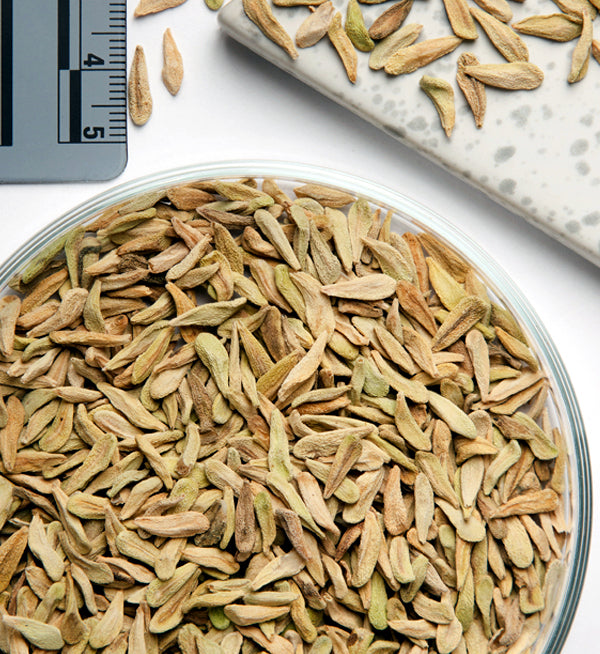
Pachypodium geayi Seeds – Madagascar Palm Rare Exotic Succulent Cactus Plant
Pachypodium geayi Seeds – Madagascar Palm Rare Exotic Succulent Cactus Plant
Couldn't load pickup availability
Madagascar Palm Tree Seeds (Pachypodium geayi)
The Madagascar Palm (Pachypodium geayi) is a rare and striking succulent tree native to Southwest Madagascar, known for its bold, architectural form and spiny, cactus-like appearance. This unusual species features a thick, silver trunk covered in sharp spines, topped with a crown of long, narrow dark green leaves with a distinctive reddish midrib.
Often confused with the more common Pachypodium lamerei, P. geayi is considered more decorative and unique, with thinner leaves and fine hairs on new growth. Its dramatic structure makes it an outstanding focal point in landscapes, as well as a stunning container or indoor plant.
This slow to moderate growing plant can add around 4 inches of growth per year, eventually forming a tall, tree-like specimen. During the growing season, it displays lush foliage, while in cooler conditions it may become deciduous, shedding leaves temporarily.
🌱 Growing & Care Information
Light: Full sun to bright indirect light
Soil: Well-drained sandy or cactus mix
Water: Low to moderate; allow soil to dry between waterings
Climate: Warm, dry conditions preferred
Growth Rate: Slow to moderate
Winter Care: May go dormant; reduce watering
Mature plants can produce large, fragrant white flowers with yellow centers, adding to its ornamental appeal. Its drought tolerance and unique form make it ideal for xeriscapes, patios, or indoor collections.
🌵 Why Grow Madagascar Palm?
• Rare and exotic succulent tree from Madagascar
• Unique spiny trunk with palm-like foliage
• Excellent container or indoor specimen plant
• Drought tolerant and low maintenance
• Produces fragrant white flowers when mature
USDA Hardiness Zones: 9–11 (Bring indoors in colder climates)
Madagascar Palm Germination:
1) Use a thermos to soak seeds in 86 degree water for 24 hours. Do not use "chlorinated water" (Distilled is Optimal)
2) Sterilize Cactus Starting Soil Mix by putting it, and the "bottom draining stones or pebbles in the microwave for 3 mins. ( In oven, 45 degrees set at 350 )
3) Use small stones or pebbles in the bottom of containers or treys. Fill 3/4" to the top. Water & let drain well. Cover with 1/2" of sand. Use a sprayer to mist until moist.
4) Place seeds "horizontally" onto the layer of sand, then cover with no more than 1/4" of sand, and moisten it with the sprayer.
5) It is extremely important for germination to use a humidity dome, or cover with a piece of plastic to retain moisture & keep high humidity.
6) It is also extremely important to use a heated propagator mat to keep the soil at 75-78 degrees F.
7) "Patience is Needed" While a few may sprout within 5 days, most can sprout at anytime all the way up to 6 months as they have very erratic germination rates very similar to other tropical & exotic seeds. One by one, as they sprout, remove the seedling from the humidity dome or covered plastic, being sure to keep them out of direct sunlight for 2 months. Simply cover the rest again until 90% of them sprout.
Germinación de la Palma de Madagascar:
1) Utilice un termo para remojar las semillas en agua a 86 grados Fahrenheit (aprox. 30 °C) durante 24 horas. No utilice "agua clorada" (el agua destilada es la opción ideal).
2) Esterilice la mezcla de tierra para siembra de cactus introduciéndola —junto con las piedras o guijarros de drenaje para el fondo— en el microondas durante 3 minutos. (Si utiliza el horno, ajuste la temperatura a 350 grados Fahrenheit).
3) Coloque piedras pequeñas o guijarros en el fondo de los recipientes o bandejas. Rellene con la mezcla de tierra hasta dejar 3/4 de pulgada (aprox. 2 cm) de espacio libre hasta el borde. Riegue y deje drenar bien. Cubra con una capa de arena de 1/2 pulgada (aprox. 1,5 cm) de espesor. Utilice un pulverizador para rociar agua hasta que la superficie quede húmeda.
4) Coloque las semillas "horizontalmente" sobre la capa de arena; luego, cúbralas con no más de 1/4 de pulgada (aprox. 0,5 cm) adicional de arena y humedezca nuevamente con el pulverizador.
5) Para lograr la germinación, es sumamente importante utilizar una cúpula de humedad (propagador) o cubrir el recipiente con un trozo de plástico para retener la humedad y mantener un ambiente de alta humedad.
6) También es de vital importancia utilizar una esterilla térmica para propagación, a fin de mantener la temperatura del sustrato entre 75 y 78 grados Fahrenheit (aprox. 24-26 °C).
7) "Se requiere paciencia": Si bien algunas semillas pueden brotar en un plazo de 5 días, la mayoría puede germinar en cualquier momento a lo largo de un periodo de hasta 6 meses, ya que presentan tasas de germinación muy erráticas, similares a las de otras semillas tropicales y exóticas. A medida que vayan brotando —una por una—, retire la plántula de la cúpula de humedad o de la cubierta de plástico, asegurándose de mantenerla alejada de la luz solar directa durante los siguientes 2 meses. Simplemente vuelva a cubrir el resto de las semillas hasta que haya brotado el 90 % de ellas.
Share